JEE MAIN 2018 · 16 APR ONLINEReactions of alkynesTRANSCRIBED
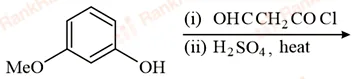
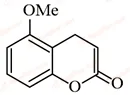
The major product of the following reaction is:
- A
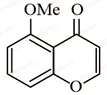
- B
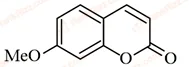
- C
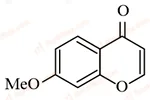
- D
Every Hydrocarbons question JEE Main has set, grouped by the idea it tests rather than the order of the syllabus. 201 questions across 10 distinct ideas. Free to read, answer key on every one.
Questions
201
Distinct ideas
10
Share of marks
4.8%
Difficulty
HARD
A chapter is not one subject — it is a handful of procedures the examiner reuses. These are the ones Hydrocarbons questions actually test.
161–180 OF 201 · NEWEST FIRST
The major product of the following reaction is:
When 2-butyne is treated with H/Lindlar's catalyst, compound X is produced as the major product and when treated with Na/liq. NH it produces Y as the major product. Which of the following statements is correct?
Y will have higher dipole moment and higher boiling point than X Y
Y will have higher dipole moment and lower boiling point than X
X will have lower dipole moment and lower boiling point than Y
X will have higher dipole moment and higher boiling point than Y
The trans-alkenes are formed by the reduction of alkynes with:
Sn - HCl
H - Pd/C, BaSO
NaBH
Na / liq. NH
The major product formed in the following reaction is:
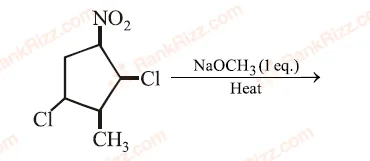
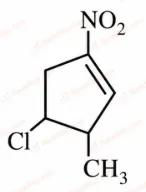
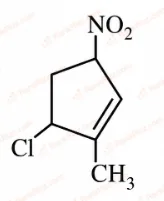
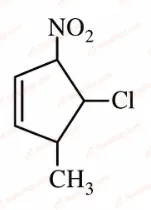
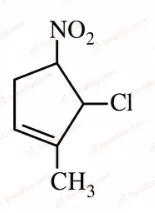
Which of the following will most readily give the dehydrohalogenation product?
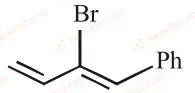
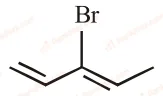
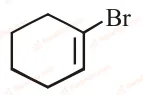
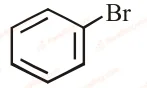
The major product of the following reaction is:
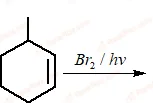
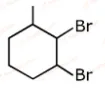
Methylcyclohexane reacts with Br/h

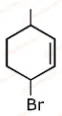
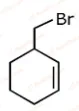
The reaction of propene with HOCl () proceeds through the intermediate:
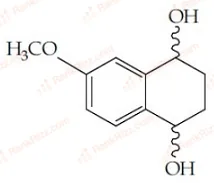
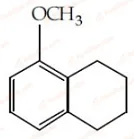
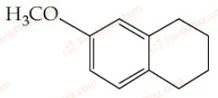
Consider the reaction sequence below:
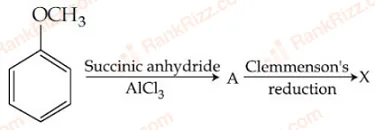
X is:
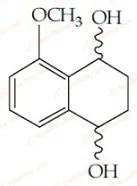
5 L of an alkane requires 25 L of oxygen for its complete combustion. If all volumes are measured at constant temperature and pressure, the alkane is
Isobutane
Ethane
Butane
Propane
What is the major product expected from the following reaction?
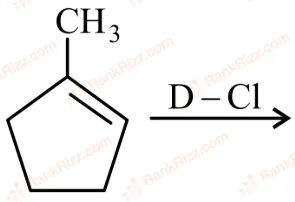
Where D is an isotope of hydrogen.
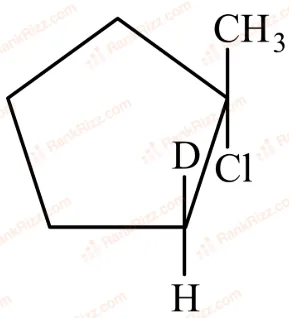
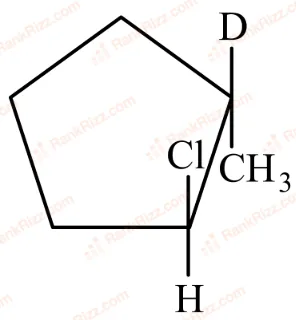
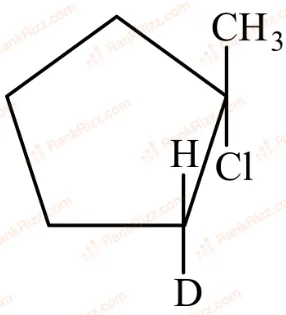
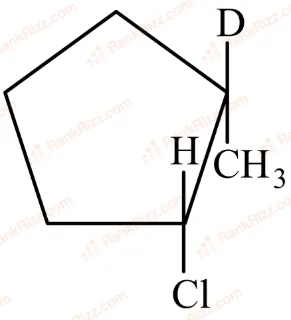
The reagent needed for converting:

Cat. Hydrogenation
H/Lindlar Cat.
Li/NH
LiAlH
In the presence of peroxide, HCl and HI do not give anti-Markownikoff's addition of alkenes because:
One of the steps is endothermic in HCl and HI
Both HCl and HI are strong acids
HCl is oxidizing and the HI is reducing
All the steps are exothermic is HCl and HI
The major product obtained in the photo catalysed bromination of 2-methylbutane is:
1-bromo-2-methylbutane
1-bromo-3-methylbutane
2-bromo-3-methylbutane
2-bromo-2-methylbutane
The addition of HI in the presence of peroxide catalyst does not follow anti-Markovnikov's rule because :
HI is a strong reducing agent.
H-I bond is too strong to be broken homolytically.
I atom combines with H atom to give back HI.
Iodine atom is not reactive enough to add across a double bond.
Which of the following would not give 2-phenylbutane as the major product in a Friedel-Crafts alkylation reaction?
1-butene + HF
2-butanol + HSO
Butanoyl chloride + AlCl then Zn, HCl
Butyl chloride + AlCl
Given
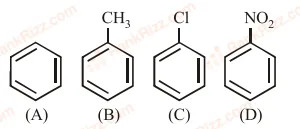
In the above compounds correct order of reactivity in electrophilic substitution reactions will be:
B > A > C > D
D > C > B > A
A > B > C > D
B > C > A > D
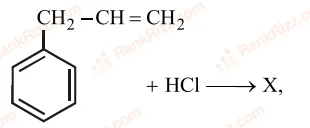
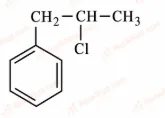
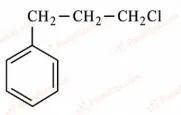
X is:
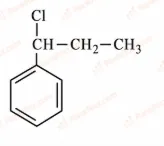
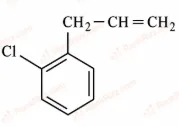
Hexyne gives transHexene on treatment with :
Which branched chain isomer of the hydrocarbon with molecular mass gives only one isomer of mono substituted alkyl halide?
Tertiary butyl chloride
Neopentane
Isohexane
Neohexane
The hydration of propyne results in formation of
Acetone
Propanol-1
Propene
Propanal
OTHER CHEMISTRY CHAPTERS