RankRizzStart free

Hydrocarbons — JEE Main Previous Year Questions

Every Hydrocarbons question JEE Main has set, grouped by the idea it tests rather than the order of the syllabus. 201 questions across 10 distinct ideas. Free to read, answer key on every one.

Questions

201

Distinct ideas

10

Share of marks

4.8%

Difficulty

HARD

The ideas inside Hydrocarbons

A chapter is not one subject — it is a handful of procedures the examiner reuses. These are the ones Hydrocarbons questions actually test.

01Alkanes: preparation and propertiesset 7×
02Reactions of alkanesset 29×
03Alkenes: preparation and stabilityset 16×
04Electrophilic addition to alkenesset 68×
05Oxidation and reduction of alkenesset 7×
06Alkynes: preparation and acidityset 6×
07Reactions of alkynesset 27×
08Benzene and aromatic hydrocarbons: structure and preparationset 2×
09Electrophilic aromatic substitutionset 22×
10Directive influence of substituentsset 17×

Every Hydrocarbons question

121–140 OF 201 · NEWEST FIRST

JEE MAIN 2021 · 17 MAR S2Electrophilic addition to alkenesTRANSCRIBED

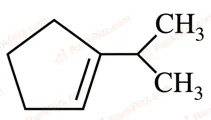
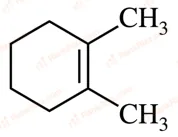
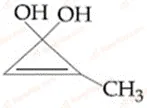
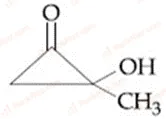
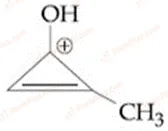
Choose the correct statement regarding the formation of carbocations A and B given:
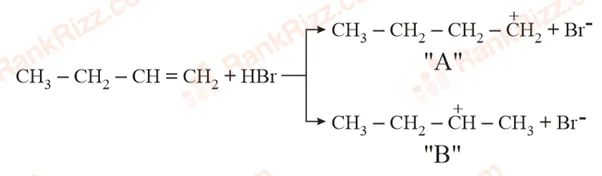
  1. A

    Carbocation B is more stable and formed relatively at faster rate

  2. B

    Carbocation A is more stable and formed relatively at slow rate

  3. C

    Carbocation B is more stable and formed relatively at slow rate

  4. D

    Carbocation A is more stable and formed relatively at faster rate
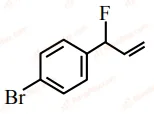
JEE MAIN 2021 · 20 JUL S2Electrophilic aromatic substitutionTRANSCRIBED

Benzene on nitration gives nitrobenzene in presence of HNO and HSO mixture, where:

  1. A

    both HSO and HNO act as a bases

  2. B

    HNO acts as an acid and HSO acts as a base

  3. C

    both HSO and HNO act as an acids

  4. D

    HNO acts as a base and HSO acts as an acid

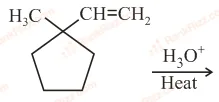
JEE MAIN 2021 · 20 JUL S2Electrophilic addition to alkenesTRANSCRIBED


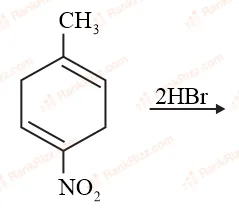
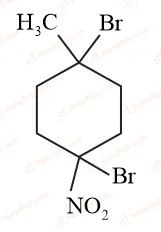
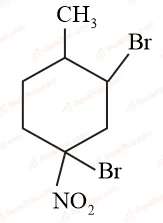
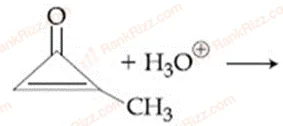
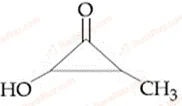
Major product P of above reaction, is:

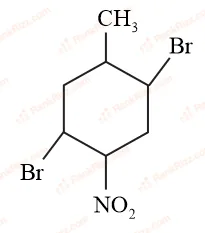
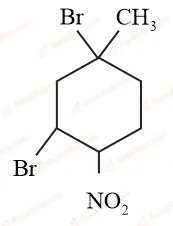
  1. A
  2. B
  3. C
  4. D
JEE MAIN 2021 · 16 MAR S2Electrophilic addition to alkenesTRANSCRIBED

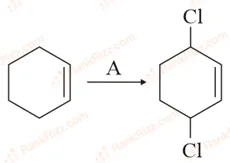
Identify the reagent(s) 'A' and condition(s) for the reaction:

  1. A

    A = HCl; Anhydrous AlCl

  2. B

    A = HCl, ZnCl

  3. C

    A = Cl; UV light

  4. D

    A = Cl; dark, Anhydrous AlCl

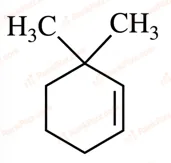
JEE MAIN 2021 · 16 MAR S1Reactions of alkynesTRANSCRIBED

Which of the following is Lindlar catalyst?

  1. A

    Zinc chloride and HCl

  2. B

    Cold dilute solution of KMnO
  3. C

    Sodium and Liquid NH

  4. D

    Partially deactivated palladised charcoal

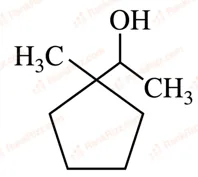
JEE MAIN 2021 · 25 FEB S2Electrophilic addition to alkenesTRANSCRIBED

The major product of the following reaction is:
  1. A

  2. B

  3. C

  4. D
JEE MAIN 2021 · 26 AUG S1Reactions of alkanesTRANSCRIBED

The major product formed in the following reaction is:

  1. A
  2. B
  3. C
  4. D
JEE MAIN 2021 · 25 JUL S2Electrophilic addition to alkenesTRANSCRIBED


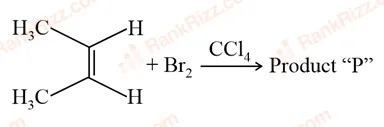
Consider the above chemical reaction. The total number of stereoisomers possible for Product "P" is _________

JEE MAIN 2021 · 25 FEB S1Reactions of alkynesTRANSCRIBED

Consider the following chemical reaction.
Product
The number of hybridized carbon atom(s) present in the product is ______

JEE MAIN 2020 · 03 SEP S1Electrophilic addition to alkenesTRANSCRIBED

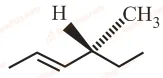
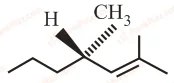
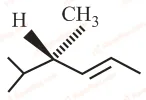
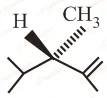
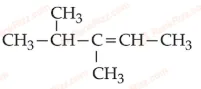
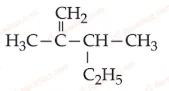
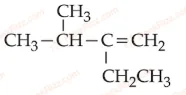
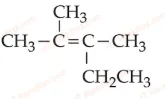
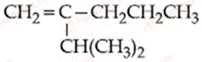
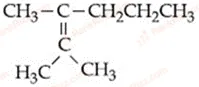
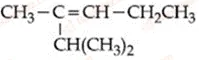
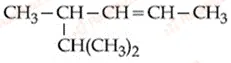
Which of the following compounds produces an optically inactive compound on hydrogenation?

  1. A
  2. B
  3. C
  4. D
JEE MAIN 2020 · 06 SEP S1Reactions of alkynesTRANSCRIBED

The major product obtained from the following reaction is:

  1. A
  2. B
  3. C
  4. D
JEE MAIN 2020 · 07 JAN S1Alkenes: preparation and stabilityTRANSCRIBED

Consider the following reactions:
(a)
(b)
(c)
(d)


Which of the reaction(s) will not produce Saytzeff product?

  1. A

    (a), (c) and (d)

  2. B

    (d) only

  3. C

    (c) only

  4. D

    (b) and (d)

JEE MAIN 2020 · 09 JAN S1Alkenes: preparation and stabilityTRANSCRIBED

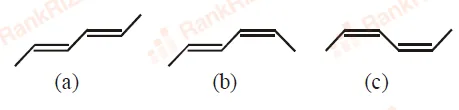
The correct order of heat of combustion for following alkadienes is:

  1. A

    (a) < (b) < (c)

  2. B

    (a) < (c) < (b)

  3. C

    (c) < (b) < (a)

  4. D

    (b) < (c) < (a)

JEE MAIN 2020 · 06 SEP S1Electrophilic addition to alkenesTRANSCRIBED

The major product of the following reaction is:

  1. A
  2. B
  3. C
  4. D
JEE MAIN 2020 · 09 JAN S1Reactions of alkynesTRANSCRIBED

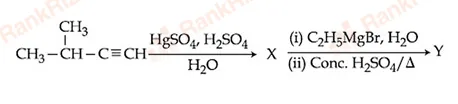
The major product (Y) in the following reactions is:

  1. A
    image
  2. B
    image
  3. C
    image
  4. D
    image
JEE MAIN 2020 · 02 SEP S1Electrophilic addition to alkenesTRANSCRIBED

The major product in the following reaction is:

  1. A
    image
  2. B
    image
  3. C
    image
  4. D
    image
JEE MAIN 2020 · 08 JAN S2Electrophilic addition to alkenesTRANSCRIBED

The major product in the following reaction is:

  1. A
  2. B
  3. C
  4. D
JEE MAIN 2020 · 08 JAN S2Electrophilic addition to alkenesTRANSCRIBED

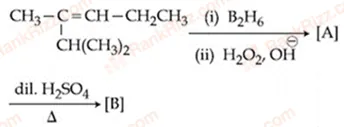
The major product [B] in the following sequence of reactions is:

  1. A
  2. B
  3. C
  4. D
JEE MAIN 2020 · 07 JAN S2Electrophilic addition to alkenesTRANSCRIBED

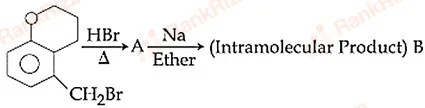
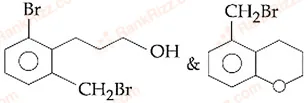
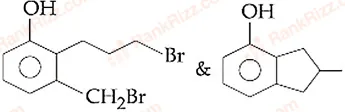
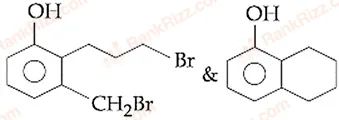
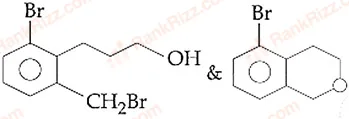
In the following reaction sequence, structures of A and B are, respectively

  1. A
  2. B
  3. C
  4. D
JEE MAIN 2020 · 04 SEP S2Electrophilic addition to alkenesTRANSCRIBED

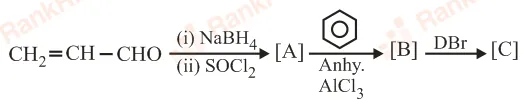
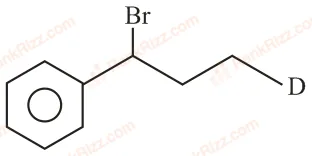
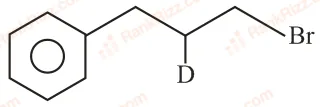
The major product [C] of the following reaction sequence will be:

  1. A
  2. B
  3. C
  4. D