JEE MAIN 2024 · 01 FEB S2Electrophilic addition to alkenesTRANSCRIBED
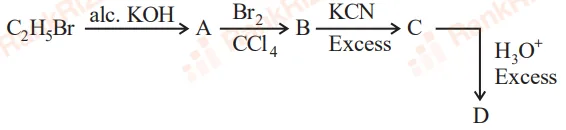
Acid D formed in above reaction is:
- A
Gluconic acid
- B
Succinic acid
- C
Oxalic acid
- D
Malonic acid
Every Hydrocarbons question JEE Main has set, grouped by the idea it tests rather than the order of the syllabus. 201 questions across 10 distinct ideas. Free to read, answer key on every one.
Questions
201
Distinct ideas
10
Share of marks
4.8%
Difficulty
HARD
A chapter is not one subject — it is a handful of procedures the examiner reuses. These are the ones Hydrocarbons questions actually test.
61–80 OF 201 · NEWEST FIRST
Acid D formed in above reaction is:
Gluconic acid
Succinic acid
Oxalic acid
Malonic acid
The major product of the following reaction is . . Number of oxygen atoms present in product '' is _______ (nearest integer)
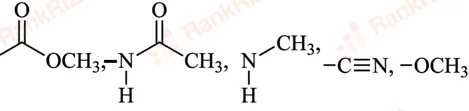
Among the following, total number of meta directing functional groups is (Integer based) , , , , , , , ,
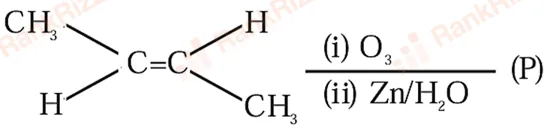
Consider the given reaction. Trans-2-butene (P)
The total number of oxygen atoms present per molecule of the product (P) is _______.
Number of alkanes obtained on electrolysis of a mixture of and is _____.
Number of compounds from the following which cannot undergo Friedel-Crafts reactions is: ________. toluene, nitrobenzene, xylene, cumene, aniline, chlorobenzene, -nitroaniline, -dinitrobenzene
Total number of deactivating groups in aromatic electrophilic substitution reaction among the following is:
Major product of the following reaction has ______ -bond.
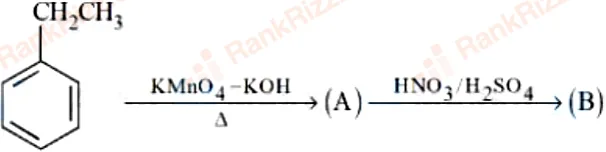
The major products from the following reaction sequence are product A and product B. The total sum of electrons in product A and product B are _______ (nearest integer)

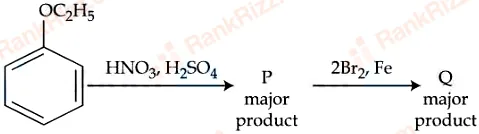
The ratio of number of oxygen atoms to bromine atoms in the product Q is ___________ .
But-2-yne is reacted separately with one mole of Hydrogen as shown below:
B CH-CC-CH A
Identify the incorrect statements from the options given below:
A. A is more soluble than B.
B. The boiling point & melting point of A are higher and lower than B respectively.
C. A is more polar than B because dipole moment of A is zero.
D. Br adds easily to B than A.
B and C only
B, C and D only
A, C and D only
A and B only
Choose the correct set of reagents for the following conversion
trans Ph - CH = CH - CH cis Ph - CH = CH - CH
Br, alc KOH, NaNH, NaLiqNH
Br, alc KOH, NaNH, H Lindlar Catalyst
Br, aq KOH, NaNH, H Lindlar Catalyst
Br, aq KOH, NaNH, NaLiqNH
In the following reaction 'X' is
CH(CH)CH X (major product)
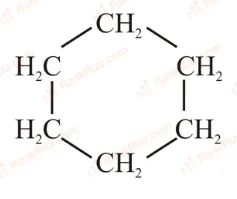
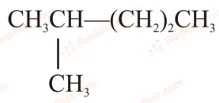
CH(CH)CHCl
ClCH(CH)CHCl
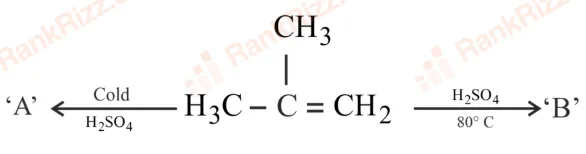
The major products 'A' and 'B', respectively, are
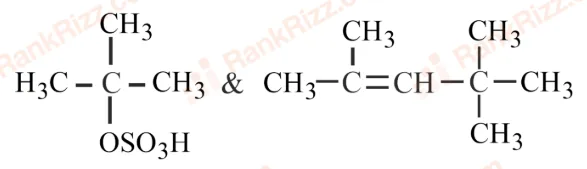
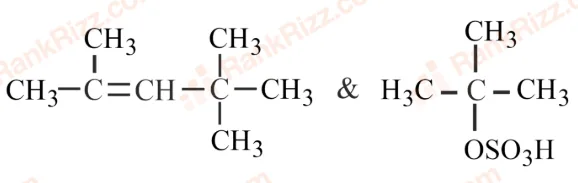
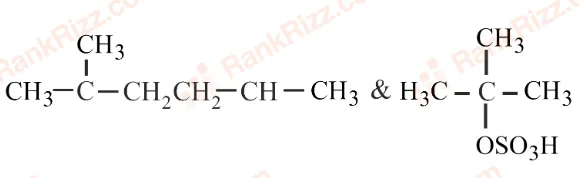
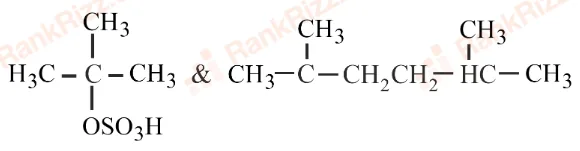
Decreasing order of reactivity towards electrophilic substitution for the following compounds is:
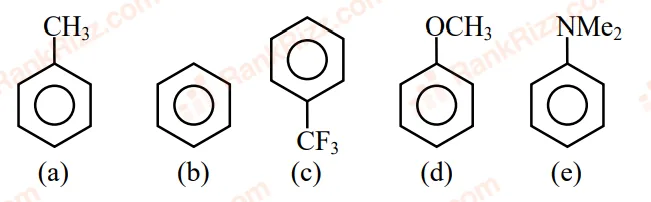
d > a > e > c > b
e > d > a > b > c
a > d > e > b > c
c > b > a > d > e
Given below are two statements, one is labelled as Assertion A and the other is labelled as Reason R.
Assertion A: Benzene is more stable than hypothetical cyclohexatriene.
Reason R: The delocalized electron cloud is attracted more strongly by nuclei of carbon atoms.
In the light of the above statements, choose the correct answer from the options given below:
A is true but R is false.
A is false but R is true.
Both A and R are correct and R is the correct explanation of A.
Both A and R are correct but R is not the correct explanation of A.
A hydrocarbon 'X' with formula CH uses two moles of H on catalytic hydrogenation of its one mole. On ozonolysis, 'X' yields two moles of methane dicarbaldehyde. The hydrocarbon 'X' is:
hexa-1, 3, 5-triene
1-methylcyclopenta-1, 4-diene
cyclohexa-1, 3-diene
cyclohexa-1, 4-diene
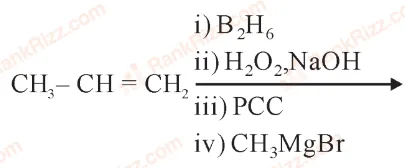
The product formed in the following multistep reaction is:
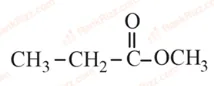
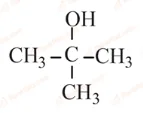
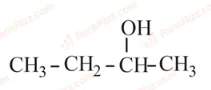
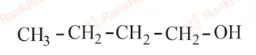
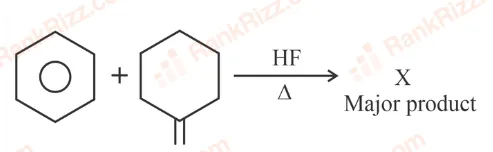
'X' is:
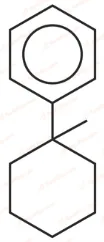
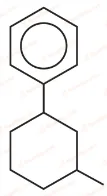
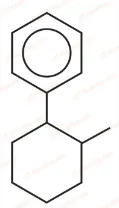
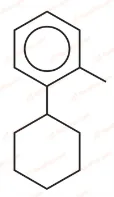
The one giving maximum number of isomeric alkenes on dehydrohalogenation reaction is (excluding rearrangement)
1-Bromo-2-methylbutane
2-Bromopropane
2-Bromopentane
2-Bromo-3,3-dimethylpentane
OTHER CHEMISTRY CHAPTERS