JEE MAIN 2025 · 04 APR S1Electrophilic addition to alkenesTRANSCRIBED
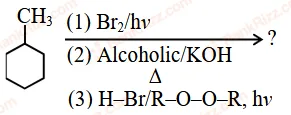
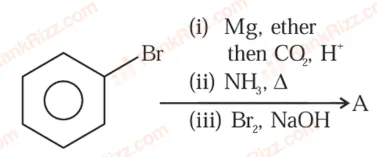
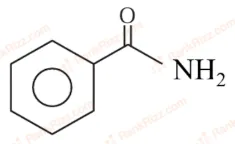
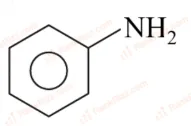
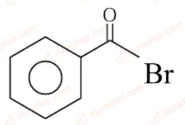
Predict the major product of the following reaction sequence:
- A
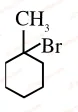
- B

- C
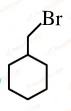
- D

Every Hydrocarbons question JEE Main has set, grouped by the idea it tests rather than the order of the syllabus. 201 questions across 10 distinct ideas. Free to read, answer key on every one.
Questions
201
Distinct ideas
10
Share of marks
4.8%
Difficulty
HARD
A chapter is not one subject — it is a handful of procedures the examiner reuses. These are the ones Hydrocarbons questions actually test.
41–60 OF 201 · NEWEST FIRST
Predict the major product of the following reaction sequence:
The reactions which cannot be applied to prepare an alkene by elimination, are
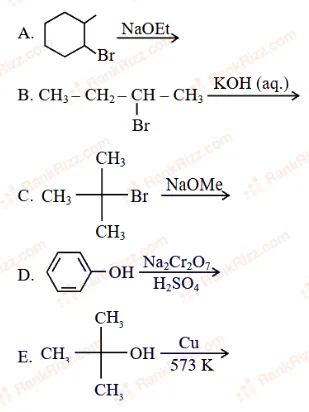
Choose the correct answer from the options given below :
B & E Only
B, C & D Only
A, C & D Only
B & D Only
The compound with molecular formula , which gives only one monobromo derivative and takes up four moles of hydrogen per mole for complete hydrogenation has ________ electrons.
A compound 'X' absorbs 2 moles of hydrogen and 'X' upon oxidation with gives

The total number of bonds present in the compound 'X' is ________.
Isomeric hydrocarbons negative Baeyer's test (Molecular formula ) The total number of isomers from above with four different non-aliphatic substitution sites is -
The incorrect statement regarding ethyne is
The bonds in ethyne is shorter than that in ethene
Both carbons are sp hybridised
Ethyne is linear
The carbon - carbon bonds in ethyne is weaker than that in ethene
Product A and B formed in the following set of reactions are:

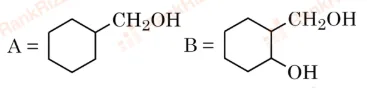
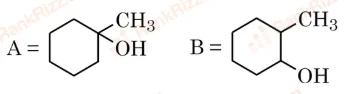
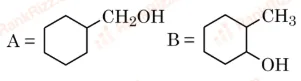
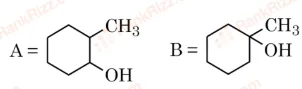
Compound formed in the following reaction reacts with gives the product . Find out and .

,
,
,
,
The set of meta directing functional groups from the following sets is:
Identify the product A and product B in the following set of reactions.
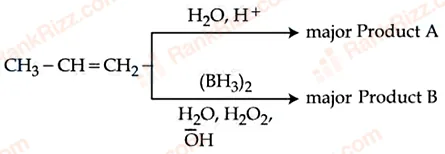

A - , B -
A - , B -

Identify product A and product B
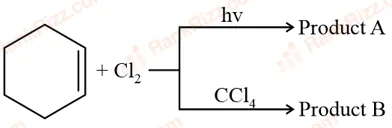
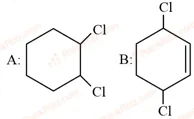
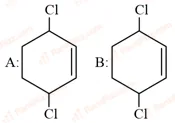
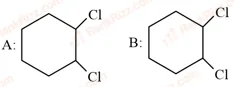
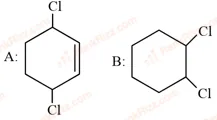
Major product of the following reaction is:
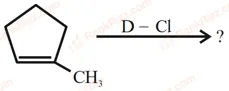
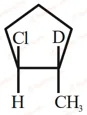
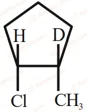
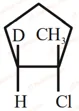
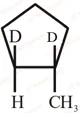
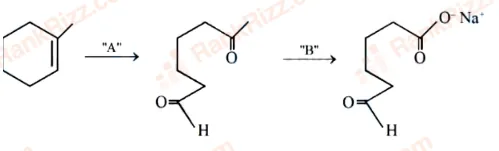
In the above chemical reaction sequence "A" and "B" respectively are:
and
and
and
and
Given below are two statements: Statement I : Nitration of benzene involves the following step
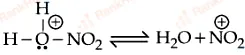
Statement II : Use of Lewis base promotes the electrophilic substitution of benzene. In the light of the above statements, choose the most appropriate answer from the options given below :
Statement I is correct but Statement II is incorrect
Statement I is incorrect but Statement II is correct
Both Statement I and Statement II are correct
Both Statement I and Statement II are incorrect
Which of the following compound will most easily be attacked by an electrophile?

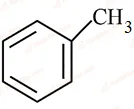
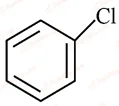
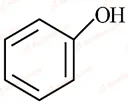
In the given reactions identify A and B.
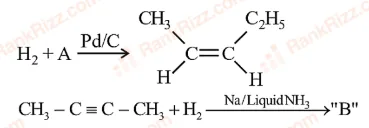
A : 2-Pentyne, B : trans-2-butene
A : n-Pentane, B : trans-2-butene
A : 2-Pentyne, B : Cis-2-butene
A : n-Pentane, B : Cis-2-butene
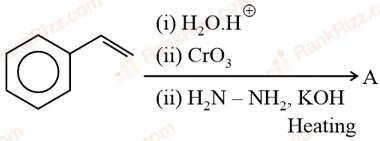
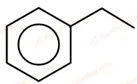
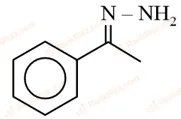
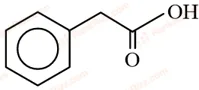
The final product A formed in the following multistep reaction sequence is:
The correct arrangement for decreasing order of electrophilic substitution for above compounds is :
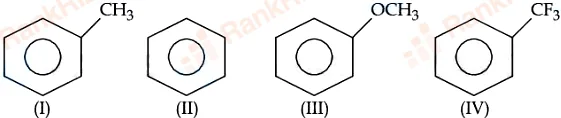
(III) > (I) > (II) > (IV)
(IV) > (I) > (II) > (III)
(III) > (IV) > (II) > (I)
(II) > (IV) > (III) > (I)
The correct order of reactivity in electrophilic substitution reaction of the following compounds is:
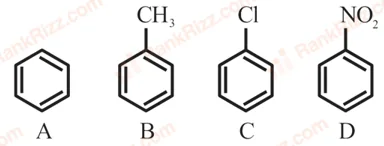
B > C > A > D
D > C > B > A
A > B > C > D
B > A > C > D
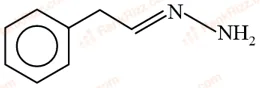
The final product , formed in the following multistep reaction sequence is:
OTHER CHEMISTRY CHAPTERS