JEE MAIN 2012Reactions of alkanesTRANSCRIBED
The major product obtained in the photobromination of 2-methyl butane is
- A
2-bromo-2-methylbutane
- B
1-bromo-2-methylbutane
- C
1-bromo-3-methylbutane
- D
2-bromo-3-methylbutane
Every Hydrocarbons question JEE Main has set, grouped by the idea it tests rather than the order of the syllabus. 201 questions across 10 distinct ideas. Free to read, answer key on every one.
Questions
201
Distinct ideas
10
Share of marks
4.8%
Difficulty
HARD
A chapter is not one subject — it is a handful of procedures the examiner reuses. These are the ones Hydrocarbons questions actually test.
181–200 OF 201 · NEWEST FIRST
The major product obtained in the photobromination of 2-methyl butane is
2-bromo-2-methylbutane
1-bromo-2-methylbutane
1-bromo-3-methylbutane
2-bromo-3-methylbutane
The product of the reaction between ethyl benzene and N-bromosuccinamide is
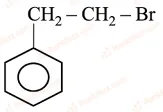
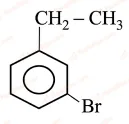
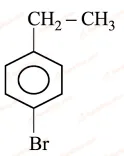
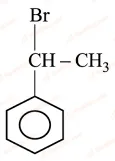
In the below mentioned compounds the decreasing order of reactivity towards electrophilic substitution is
(i)
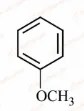
(ii)
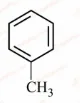
(iii)
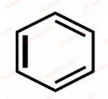
(iv)
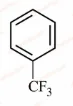
(iv) > (i) > (ii) > (iii)
(ii) > (iii) > (i) > (iv)
(iii) > (i) > (iv) > (ii)
(i) > (ii) > (iii) > (iv)
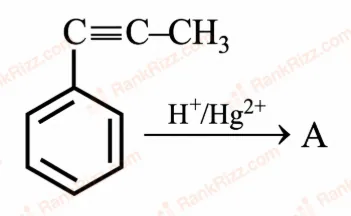
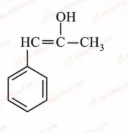
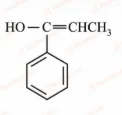
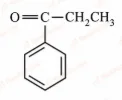
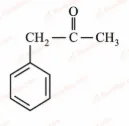
In the given reaction, the product 'A' is
Ozonolysis of an organic compound gives formaldehyde as one of the products. This confirms the presence of:
a vinyl group
an isopropyl group
an acetylenic triple bond
two ethylenic double bonds
One mole of a symmetrical alkene on ozonolysis gives two moles of an aldehyde having a molecular mass of u. The alkene is
propene
1-butene
2-butene
ethene
In the following sequence of reactions, the alkene affords the compound '' $CH_3 CH = CHCH_3 \xrightarrow{O_3} A \xrightarrow{H_2 O,\ Zn} B.$ The compound B is
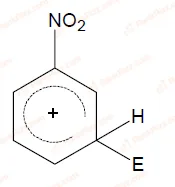
The electrophile, attacks the benzene ring to generate the intermediate -complex. Of the following, which -complex is of lowest energy?
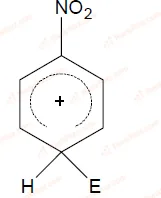
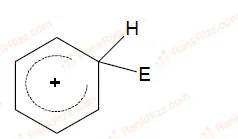
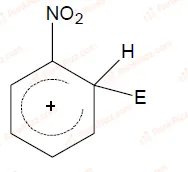
The treatment of with produces
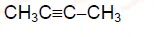
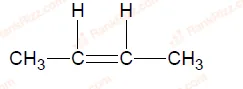

The hydrocarbon which can react with sodium in liquid ammonia is
The reaction of toluene with in presence of gives predominantly
benzoyl chloride
benzyl chloride
and chlorotoluene
chlorotoluene
Presence of a nitro group in a benzene ring
activates the ring towards electrophilic substitution
renders the ring basic
deactivates the ring towards nucleophilic substitution
deactivates the ring towards electrophilic substitution
Which of the following reactions will yield dibromopropane?
The compound formed as a result of oxidation of ethyl benzene by is
benzophenone
acetophenone
benzoic acid
benzyl alcohol
The alkene formed as a major product in the above elimination reaction is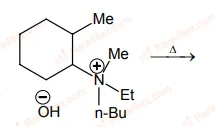
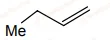
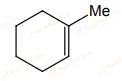
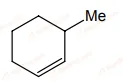
HBr reacts with under anhydrous conditions at room temperature to give
and
and
Of the five isomeric hexanes, the isomer which can give two monochlorinated compounds is
n-hexane
2,3-dimethylbutane
2,2-dimethylbutane
2-methylpentane
2-methylbutane on reacting with bromine in the presence of sunlight gives mainly
1-bromo-2-methylbutane
2-bromo-2-methylbutane
2-bromo-3-methylbutane
1-bromo-3-methylbutane
Reaction of one molecule of HBr with one molecule of 1,3-butadiene at C gives predominantly
3-bromobutene under kinetically controlled conditions
1-bromo-2-butene under thermodynamically controlled conditions
3-bromobutene under thermodynamically controlled conditions
1-bromo-2-butene under kinetically controlled conditions
Acid catalyzed hydration of alkenes except ethene leads to the formation of
primary alcohol
secondary or tertiary alcohol
mixture of primary and secondary alcohols
mixture of secondary and tertiary alcohols
OTHER CHEMISTRY CHAPTERS