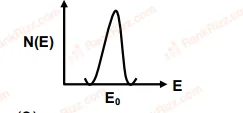
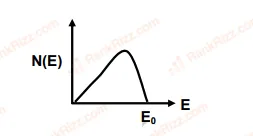
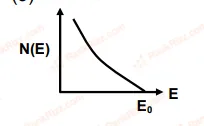
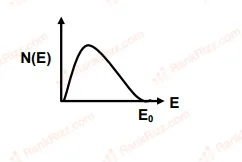
A nucleus of mass is at rest and decays into two daughter nuclei of equal mass each. Speed of light is . The binding energy per nucleon for the parent nucleus is and that for the daughter nuclei is . Then
- A
- B
E_1 > E_2
- C
E_2 > E_1
- D
Every Atoms & Nuclei question JEE Main has set, grouped by the idea it tests rather than the order of the syllabus. 304 questions across 6 distinct ideas. Free to read, answer key on every one.
Questions
304
Distinct ideas
6
Share of marks
4.8%
Difficulty
EASY
A chapter is not one subject — it is a handful of procedures the examiner reuses. These are the ones Atoms & Nuclei questions actually test.
281–300 OF 304 · NEWEST FIRST
A nucleus of mass is at rest and decays into two daughter nuclei of equal mass each. Speed of light is . The binding energy per nucleon for the parent nucleus is and that for the daughter nuclei is . Then
E_1 > E_2
E_2 > E_1
A nucleus of mass is at rest and decays into two daughter nuclei of equal mass each. Speed of light is . The speed of daughter nuclei is
A radioactive nucleus (initial mass number and atomic number ) emits 3 -particles and 2 positrons. The ratio of number of neutrons to that of protons in the final nucleus will be
The transition from the state to in a hydrogen like atom results in ultraviolet radiation. Infrared radiation will be obtained in the transition from
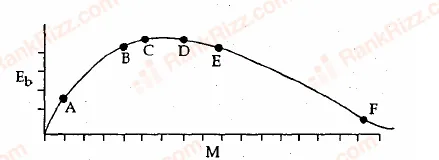
The above is a plot of binding energy per nucleon , against the nuclear mass ; correspond to different nuclei. Consider four reactions: (i) (ii) (iii) and (iv) where is the energy released? In which reactions is positive? 
(i) and (iv)
(i) and (iii)
(ii) and (iv)
(ii) and (iii)
Suppose an electron is attracted towards the origin by a force where '' is a constant and '' is the distance of the electron from the origin. By applying Bohr model to this system, the radius of the orbital of the electron is found to be '' and the kinetic energy of the electron to be . Then which of the following is true?
independent of ,
This question contains Statement-1 and Statement-2. Of the four choices given after the statements, choose the one that best describes the two statements. Statement - I: Energy is released when heavy nuclei undergo fission or light nuclei undergo fusion. Statement - II: For heavy nuclei, binding energy per nucleon increases with increasing while for light nuclei it decrease with increasing .
Statement-1 is false, Statement-2 is true.
Statement-1 is true, Statement-2 is true; Statement-2 is correct explanation for Statement-1.
Statement-1 is true, Statement-2 is true; Statement-2 is not a correct explanation for Statement-1.
Statement-1 is true, Statement-2 is False.
Which of the following transitions in hydrogen atoms emit photons of highest frequency?
to
to
to
to
If is the mass of an oxygen isotope , and are the masses of a proton and a neutron respectively, the nuclear binding energy of the isotope is
In gamma ray emission from a nucleus
both the neutron number and the proton number change
there is no change in the proton number and the neutron number.
only the neutron number changes
only the proton number changes
The half-life period of a radio-active element is same as the mean life time of another radioactive element . Initially they have the same number of atoms. Then
will decay faster than
and have same decay rate initially
and decay at same rate always.
An alpha nucleus of energy bombards a heavy nuclear target of charge . Then the distance of closest approach for the alpha nucleus will be proportional to
The energy spectrum of -particles [number as a function of -energy ] emitted from a radioactive source is


When nuclei are bombarded by protons, and the resultant nuclei are , the emitted particles will be
neutrons
alpha particles
beta particles
gamma photons
The 'rad' is the correct unit used to report the measurement of
the rate of decay of radioactive source
the ability of a beam of gamma ray photons to produce ions in a target
the energy delivered by radiation to a target.
the biological effect of radiation
If the binding energy per nucleon in and nuclei are and respectively, then in the reaction energy of proton must be
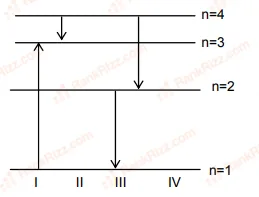
The diagram shows the energy levels for an electron in a certain atom. Which transition shown represents the emission of a photon with the most energy? 
III
IV
I
II
The intensity of gamma radiation from a given source is . On passing through mm of lead, it is reduced to . The thickness of lead which will reduce the intensity to will be
mm
mm
mm
mm
Starting with a sample of pure Cu, of it decays into Zn in minutes. The corresponding half-life is
minutes
minutes
minutes
minutes
If radius of Al nucleus is estimated to be Fermi then the radius of Te nucleus be nearly
fermi
fermi
fermi
fermi
OTHER PHYSICS CHAPTERS