RankRizzStart free

Chemical Bonding and Molecular Structure — JEE Main Previous Year Questions

Every Chemical Bonding and Molecular Structure question JEE Main has set, grouped by the idea it tests rather than the order of the syllabus. 316 questions across 11 distinct ideas. Free to read, answer key on every one.

Questions

316

Distinct ideas

11

Share of marks

4.8%

Difficulty

MEDIUM

The ideas inside Chemical Bonding and Molecular Structure

A chapter is not one subject — it is a handful of procedures the examiner reuses. These are the ones Chemical Bonding and Molecular Structure questions actually test.

01Ionic bonding, lattice energy and Born-Haber cycleset 1×
02Fajans' rules, polarisation and covalent characterset 15×
03Lewis structures, formal charge and coordinate bondsset 10×
04Resonance and bond parametersset 17×
05VSEPR theory and shapes of molecules and ionsset 118×
06Hybridisation and bond anglesset 8×
07Valence bond theory, orbital overlap and sigma/pi bondsset 5×
08Dipole moment and molecular polarityset 29×
09Molecular orbital theory of diatomic speciesset 79×
10Hydrogen bonding and intermolecular forcesset 31×
11Back bonding and electron-deficient bondingset 3×

Every Chemical Bonding and Molecular Structure question

241–260 OF 316 · NEWEST FIRST

JEE MAIN 2017 · 08 APR ONLINEMolecular orbital theory of diatomic speciesTRANSCRIBED

Which of the following is paramagnetic?

  1. A

    CO

  2. B

    NO

  3. C

  4. D

JEE MAIN 2017 · 08 APR ONLINEVSEPR theory and shapes of molecules and ionsTRANSCRIBED

hybridization is not displayed by

  1. A

  2. B

  3. C

  4. D

JEE MAIN 2017 · 09 APR ONLINEVSEPR theory and shapes of molecules and ionsTRANSCRIBED

The group having triangular planar structure is:

  1. A

    BF, NF, CO

  2. B

    CO, NO, SO

  3. C

    NH, SO, CO

  4. D

    NCl, BCl, SO

JEE MAIN 2017 · 02 APR OFFLINEMolecular orbital theory of diatomic speciesTRANSCRIBED

Which of the following species is not paramagnetic?

  1. A

    CO

  2. B

    O

  3. C

    B

  4. D

    NO

JEE MAIN 2017 · 09 APR ONLINEHydrogen bonding and intermolecular forcesTRANSCRIBED

The increasing order of the boiling points for the following compounds is:
(I) CHOH    (II) CHCl    (III) CHCH    (IV) CHOCH

  1. A

    (IV) < (III) < (I) < (II)

  2. B

    (III) < (II) < (I) < (IV)

  3. C

    (III) < (IV) < (II) < (I)

  4. D

    (II) < (III) < (IV) < (I)

JEE MAIN 2016 · 10 APR ONLINEResonance and bond parametersTRANSCRIBED

The bond angle H-X-H is the greatest in the compound:

  1. A

  2. B

  3. C

  4. D

JEE MAIN 2016 · 03 APR OFFLINEVSEPR theory and shapes of molecules and ionsTRANSCRIBED

The species in which the N atom is in a state of sp hybridization is:

  1. A

  2. B

  3. C

  4. D

JEE MAIN 2016 · 09 APR ONLINEVSEPR theory and shapes of molecules and ionsTRANSCRIBED

The group of molecules having identical shape is:

  1. A

    , ,

  2. B

    , ,

  3. C

    , ,

  4. D

    , ,

JEE MAIN 2016 · 09 APR ONLINEHydrogen bonding and intermolecular forcesTRANSCRIBED

Which intermolecular force is most responsible in allowing xenon gas to liquefy?

  1. A

    London forces

  2. B

    Ion-dipole

  3. C

    Ionic

  4. D

    Dipole-dipole

JEE MAIN 2015 · 04 APR OFFLINEHydrogen bonding and intermolecular forcesTRANSCRIBED

The intermolecular interaction that is dependent on the inverse cube of distance between the molecules is:

  1. A

    Hydrogen bond

  2. B

    Ion-ion interaction

  3. C

    Ion-dipole interaction

  4. D

    London force

JEE MAIN 2015 · 10 APR ONLINEVSEPR theory and shapes of molecules and ionsTRANSCRIBED

The shape of by VSEPR theory is:

  1. A

    Trigonal bipyramidal

  2. B

    Square pyramidal

  3. C

    Pentagonal planar

  4. D

    Octahedral

JEE MAIN 2015 · 10 APR ONLINEMolecular orbital theory of diatomic speciesTRANSCRIBED

After understanding the assertion and reason, choose the correct option.
Assertion: In the bonding molecular orbital (MO) of , electron density is increased between the nuclei.
Reason: The bonding MO is , which shows destructive interference of the combining electron waves.

  1. A

    Assertion and Reason are correct, but Reason is not the correct explanation for the Assertion.

  2. B

    Assertion and Reason are correct and Reason is the correct explanation for the Assertion.

  3. C

    Assertion is incorrect, Reason is correct.

  4. D

    Assertion is correct, Reason is incorrect.

JEE MAIN 2015 · 11 APR ONLINEDipole moment and molecular polarityTRANSCRIBED

Molecule AB has a bond length of 1.617 and a dipole moment of 0.38 D. The fractional charge on each atom (absolute magnitude) is: esu

  1. A

    0.5

  2. B

    0.05

  3. C

    0

  4. D

    1.0

JEE MAIN 2015 · 11 APR ONLINEDipole moment and molecular polarityTRANSCRIBED

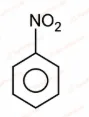
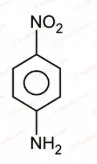
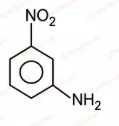
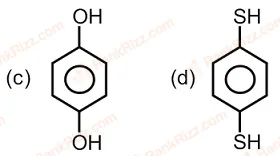
Which compound exhibits maximum dipole moment among the following?
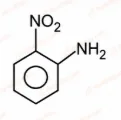
  1. A
    image
  2. B
    image
  3. C
    image
  4. D
    image
JEE MAIN 2014 · 19 APR ONLINEMolecular orbital theory of diatomic speciesTRANSCRIBED

Which one of the following molecules is paramagnetic?

  1. A

    N

  2. B

    O

  3. C

    CO

  4. D

    NO

JEE MAIN 2014 · 06 APR OFFLINEDipole moment and molecular polarityTRANSCRIBED

For which of the following molecule significant ?
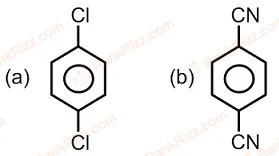
  1. A

    Only (a)

  2. B

    (a) and (b)

  3. C

    Only (c)

  4. D

    (c) and (d)

JEE MAIN 2014 · 09 APR ONLINEValence bond theory, orbital overlap and sigma/pi bondsTRANSCRIBED

The number and type of bonds in C ion in CaC are:

  1. A

    Two -bonds and two -bonds

  2. B

    One -bond and two -bonds

  3. C

    One -bond and one -bond

  4. D

    Two -bonds and one -bond

JEE MAIN 2014 · 11 APR ONLINEMolecular orbital theory of diatomic speciesTRANSCRIBED

The correct order of bond dissociation energy among N, O, O is shown in which of the following arrangements?

  1. A

    N > O > O

  2. B

    O > O > N

  3. C

    N > O > O

  4. D

    O > O > N

JEE MAIN 2014 · 09 APR ONLINEMolecular orbital theory of diatomic speciesTRANSCRIBED

Which of the following has unpaired electron(s)?

  1. A

    O

  2. B

    N

  3. C

    O

  4. D

    N

JEE MAIN 2014 · 11 APR ONLINEBack bonding and electron-deficient bondingTRANSCRIBED

Which one of the following does not have a pyramidal shape?

  1. A

    (CH) N

  2. B

    (SiH) N

  3. C

    P(CH)

  4. D

    P(SiH)