JEE MAIN 2020 · 09 JAN S1Molecular orbital theory of diatomic speciesTRANSCRIBED
If the magnetic moment of a di-oxygen species is 1.73 B.M., it may be:
- A
or
- B
or
- C
or
- D
or
Every Chemical Bonding and Molecular Structure question JEE Main has set, grouped by the idea it tests rather than the order of the syllabus. 316 questions across 11 distinct ideas. Free to read, answer key on every one.
Questions
316
Distinct ideas
11
Share of marks
4.8%
Difficulty
MEDIUM
A chapter is not one subject — it is a handful of procedures the examiner reuses. These are the ones Chemical Bonding and Molecular Structure questions actually test.
201–220 OF 316 · NEWEST FIRST
If the magnetic moment of a di-oxygen species is 1.73 B.M., it may be:
or
or
or
or
The compound that has the largest bond angle () is:
Consider the following molecules and statements related to them:
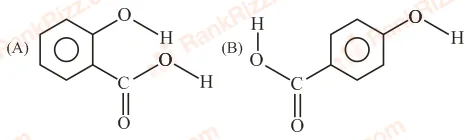
(a) (B) is more likely to be crystalline than (A)
(b) (B) has higher boiling point than (A)
(c) (B) dissolves more readily than (A) in water
Identify the correct option from below:
(a) and (b) are true
(a) and (c) are true
only (a) is true
(b) and (c) are true
The intermolecular potential energy for the molecules A, B, C and D given below suggests that:
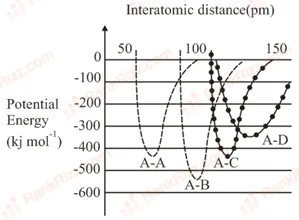
A - D has the shortest bond length
A - A has the largest bond enthalpy
D is more electronegative than other atoms.
A - B has the stiffest bond.
The predominant intermolecular forces present in ethyl acetate, a liquid, are:
London dispersion and dipole-dipole
hydrogen bonding and London dispersion
Dipole-dipole and hydrogen bonding
London dispersion, dipole-dipole and hydrogen bonding
Match the type of interaction in column A with the distance dependence of their interaction energy in column B:
A B
(i) ion - ion (a)
(ii) Dipole - dipole (b)
(iii) London dispersion (c)
(iv)
(i)-(b); (ii)-(d); (iii)-(c)
(i)-(a); (ii)-(b); (iii)-(d)
(i)-(a); (ii)-(b); (iii)-(c)
(i)-(a); (ii)-(c); (iii)-(d)
The relative strength of the interionic/ intermolecular forces in a decreasing order is:
dipole-dipole > ion-dipole > ion-ion
ion-dipole > ion-ion > dipole-dipole
ion-dipole > dipole-dipole > ion-ion
ion-ion > ion-dipole > dipole-dipole
The molecular geometry of is octahedral. What is the geometry of (including lone pair(s) of electrons, if any)?
Tetrahedral
Trigonal bipyramidal
Pyramidal
Square planar
The number of hybrid orbitals in a molecule of benzene is:
24
6
18
12
The structure of in the solid state is:
tetrahedral and octahedral
square planar and octahedral
square pyramidal
trigonal bipyramidal
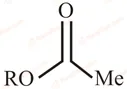
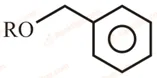
Which of the following derivatives of alcohols is unstable in an aqueous base?
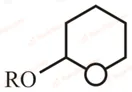
Chlorine reacts with hot and concentrated NaOH and produces compounds (X) and (Y). Compound (X) gives white precipitate with silver nitrate solution. The average bond order between Cl and O atoms in (Y) is
The type of hybridization and no. of lone pair(s) of electron of Xe in , respectively, are:
and 1
and 2
and 2
and 1
Two pi and half sigma bonds are present in:
Among the following species, the diamagnetic molecule is:
CO
B
O
NO
According to molecular orbital theory, which of the following is true with respect to and ?
is stable and is unstable
Both are unstable
Both are stable
is unstable and is stable
During the change of O to O, the incoming electron goes to the orbital:
2p
2p
2p
2p
In which of the following processes, the bond order has increased and paramagnetic character has changed to diamagnetic?
Among the following, the molecule expected to be stabilized by anion formation is: C, O, NO, F
F
C
O
NO
The correct statement among the following is:
is planar and less basic than
is pyramidal and more basic than
is pyramidal and less basic than
is planar and more basic than
OTHER CHEMISTRY CHAPTERS