RankRizzStart free

Aldehydes and Ketones — JEE Main Previous Year Questions

Every Aldehydes and Ketones question JEE Main has set, grouped by the idea it tests rather than the order of the syllabus. 214 questions across 5 distinct ideas. Free to read, answer key on every one.

Questions

214

Distinct ideas

5

Share of marks

4.6%

Difficulty

HARD

The ideas inside Aldehydes and Ketones

A chapter is not one subject — it is a handful of procedures the examiner reuses. These are the ones Aldehydes and Ketones questions actually test.

01Preparation of aldehydes and ketonesset 25×
02Nucleophilic addition reactions of carbonyl compoundsset 138×
03Aldol condensation, Cannizzaro and related reactionsset 4×
04Oxidation and reduction of carbonyl compoundsset 13×
05Distinguishing tests for aldehydes and ketonesset 34×

Every Aldehydes and Ketones question

21–40 OF 214 · NEWEST FIRST

JEE MAIN 2026 · 08 APR S2Nucleophilic addition reactions of carbonyl compoundsTRANSCRIBED

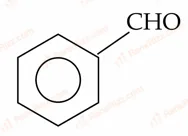
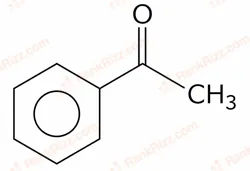
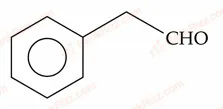
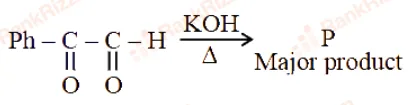
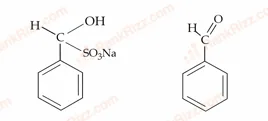
'' is the product which is obtained from benzene by reacting it with carbon monoxide and hydrogen chloride in the presence of cuprous chloride. '' is the major product obtained from the benzene by reacting it with ethanoyl chloride in the presence of anhydrous AlCl. Product (major) obtained by heating and in the presence of alkali is . Total number of (pi) electrons in is __________.
JEE MAIN 2026 · 02 APR S2Nucleophilic addition reactions of carbonyl compoundsTRANSCRIBED

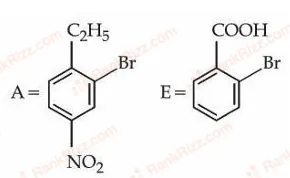
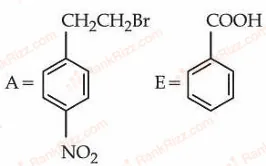
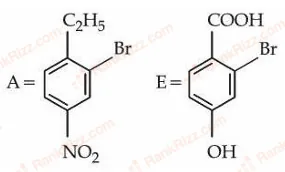
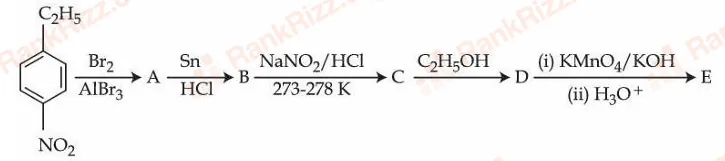
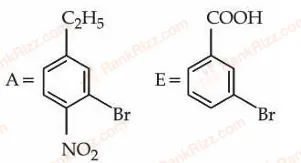
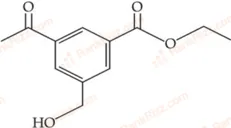
Identify compounds A and E in the following reaction sequence.
image
  1. A
    image
  2. B
    image
  3. C
    image
  4. D
    image
JEE MAIN 2026Preparation of aldehydes and ketonesTRANSCRIBED
Screenshot 2026-09-01 5

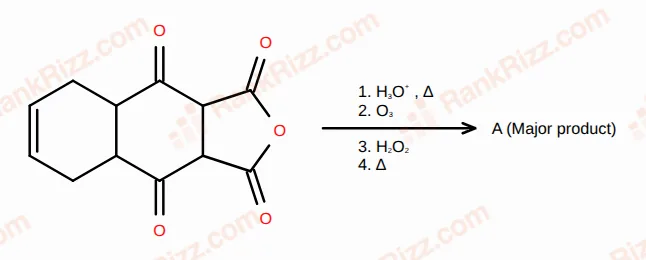
The ratio of number of keto groups to the number of carbons in the major product is:

  1. A

    3 : 1

  2. B

    3 : 8

  3. C

    1 : 3

  4. D

    2 : 3

JEE MAIN 2025 · 28 JAN S1Nucleophilic addition reactions of carbonyl compoundsTRANSCRIBED

Both acetaldehyde and acetone (individually) undergo which of the following reactions? A. Iodoform Reaction B. Cannizaro Reaction C. Aldol Condensation D. Tollen's Test E. Clemmensen Reduction Choose the correct answer from the options given below:

  1. A

    A, B and D Only

  2. B

    C, and E Only

  3. C

    A, C and E Only

  4. D

    B, C and D Only

JEE MAIN 2025 · 02 APR S1Nucleophilic addition reactions of carbonyl compoundsTRANSCRIBED

An optically active alkyl halide [A] reacts with hot KOH dissolved in ethanol and forms alkene [B] as major product which reacts with bromine to give dibromide [C]. The compound [C] is converted into a gas [D] upon reacting with alcoholic NaNH. During hydration 18 gram of water is added to 1 mole of gas [D] on warming with mercuric sulphate and dilute acid at 333 K to form compound [E]. The IUPAC name of compound [E] is:

  1. A

    But-2-yne

  2. B

    Butan-2-ol

  3. C

    Butan-2-one

  4. D

    Butan-1-al

JEE MAIN 2025 · 04 APR S2Distinguishing tests for aldehydes and ketonesTRANSCRIBED

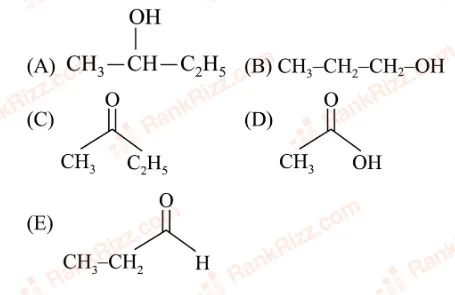
Which among the following compounds give yellow solid when reacted with NaOI/NaOH?

image

Choose the correct answer from the options given below :

  1. A

    (B), (C) and (E) Only

  2. B

    (A) and (C) Only

  3. C

    (C) and (D) Only

  4. D

    (A), (C) and (D) Only

JEE MAIN 2025 · 24 JAN S1Nucleophilic addition reactions of carbonyl compoundsTRANSCRIBED

Aman has been asked to synthesise the molecule

page7_img7

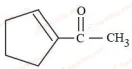
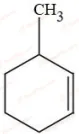
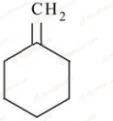
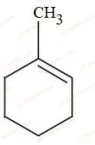
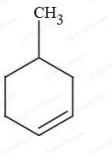
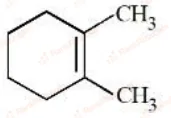
(x).He thought of preparing the molecule using an aldol condensation reaction. He found a few cyclic alkenes in his laboratory. He thought of performing ozonolysis reaction on alkene to produce a dicarbonyl compound followed by aldol reaction to prepare " x ". Predict the suitable alkene that can lead to the formation of " x ".

  1. A
    page8_img1
  2. B
    page8_img2
  3. C
    page8_img3
  4. D
    page8_img4
JEE MAIN 2025 · 28 JAN S1Nucleophilic addition reactions of carbonyl compoundsTRANSCRIBED

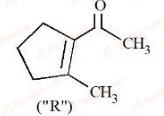
A molecule (" P ") on treatment with acid undergoes rearrangement and gives ("Q"). ("Q") on ozonolysis followed by reflux under alkaline condition gives (" R "). The structure of (" R ") is given below.

page9_img1


The structure of("P")is

  1. A
    page9_img2
  2. B
    page9_img3
  3. C
    page9_img4
  4. D
    page9_img5
JEE MAIN 2025 · 04 APR S1Nucleophilic addition reactions of carbonyl compoundsTRANSCRIBED

Aldol condensation is a popular and classical method to prepare -unsaturated carbonyl compounds. This reaction can be both intermolecular and intramolecular. Predict which one of the following is not a product of intramolecular aldol condensation?

  1. A
    image
  2. B
    image
  3. C
    image
  4. D
    image
JEE MAIN 2025 · 24 JAN S1Nucleophilic addition reactions of carbonyl compoundsTRANSCRIBED

Which of the following arrangements with respect to their reactivity in nucleophilic addition reaction is correct?

  1. A

    acetophenone < benzaldehyde < p-tolualdehyde < p- nitrobenzaldehyde

  2. B

    benzaldehyde < acetophenone < p-nitrobenzaldehyde < p-tolualdehyde

  3. C

    p- nitrobenzaldehyde < benzaldehyde < p-tolualdehyde < acetophenone

  4. D

    acetophenone  < p-tolualdehyde < benzaldehyde < p- nitrobenzaldehyde

JEE MAIN 2025 · 07 APR S2Distinguishing tests for aldehydes and ketonesTRANSCRIBED

"P" is an optically active compound with molecular formula . When "P" is treated with 2,4-dinitrophenylhydrazine, it gives a positive test. However, in presence of Tollens reagent, "P" gives a negative test. Predict the structure of "P".

  1. A
    image
  2. B
    image
  3. C
    image
  4. D
    image
JEE MAIN 2025 · 23 JAN S2Nucleophilic addition reactions of carbonyl compoundsTRANSCRIBED

Given below are two statements : Consider the following reaction

page10_img1
  1. A

    Both Statement I and Statement II are false

  2. B

    Statement I is true but Statement II is false

  3. C

    Statement I is false but Statement II is true

  4. D

    Both Statement I and Statement II are true

JEE MAIN 2025 · 22 JAN S1Distinguishing tests for aldehydes and ketonesTRANSCRIBED

The compounds which give positive Fehling's test are :

(A). 

image

(B). 

image

(C).

(D).

(E). 

image


Choose the correct answer from the options given below :

  1. A

    (A), (D) and (E) Only

  2. B

    (C), (D) and (E) Only

  3. C

    (A), (C) and (D) Only

  4. D

    (A), (B) and (C) Only

JEE MAIN 2025 · 03 APR S2Nucleophilic addition reactions of carbonyl compoundsTRANSCRIBED

The major product (P) in the following reaction is:

image
  1. A
    image
  2. B
    image
  3. C
    image
  4. D
    image
JEE MAIN 2025 · 29 JAN S1Nucleophilic addition reactions of carbonyl compoundsTRANSCRIBED

The product (P) formed in the following reaction is :

image
  1. A
    image
  2. B
    image
  3. C
    image
  4. D
    image
JEE MAIN 2025 · 02 APR S1Nucleophilic addition reactions of carbonyl compoundsTRANSCRIBED

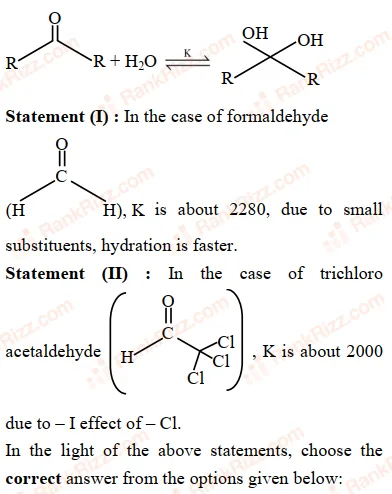
Given below are two statements:

image

In the light of the above statements, choose the most appropriate answer from the options given below:

  1. A

    Statement I is incorrect but Statement II is correct

  2. B

    Statement I is correct but Statement II is incorrect

  3. C

    Both Statement I and Statement II are incorrect

  4. D

    Both Statement I and Statement II are correct

JEE MAIN 2025 · 03 APR S1Distinguishing tests for aldehydes and ketonesTRANSCRIBED

Number of molecules from below which cannot give iodoform reaction is :
Ethanol, Isopropyl alcohol, Bromoacetone, 2-Butanol, 2-Butanone, Butanal, 2-Pentanone, 3-Pentanone, Pentanal and 3-Pentanol

  1. A

  2. B

  3. C

  4. D

JEE MAIN 2025 · 23 JAN S1Nucleophilic addition reactions of carbonyl compoundsTRANSCRIBED

The major product of the following reaction is:

image
  1. A
    page10_img1
  2. B
    page10_img2
  3. C
    page10_img3
  4. D
    page10_img4
JEE MAIN 2025 · 22 JAN S2Nucleophilic addition reactions of carbonyl compoundsTRANSCRIBED
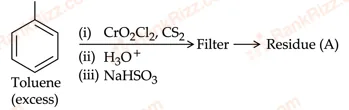
image


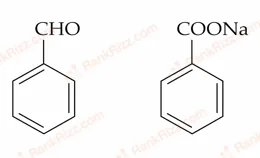
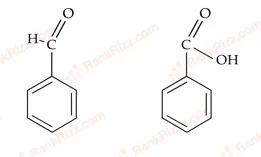
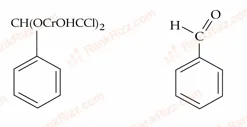
Residue (A) + HCl (dil) Compound (B) Structure of residue (A) and Compound (B) formed respectively is :

  1. A
    image
  2. B
    image
  3. C
    image
  4. D
    image
JEE MAIN 2025 · 04 APR S1Nucleophilic addition reactions of carbonyl compoundsTRANSCRIBED

An organic compound (X) with molecular formula is not readily oxidised. On reduction it gives which reacts with HBr to give a bromide (Z) which is converted to Grignard reagent. This Grignard reagent on reaction with (X) followed by hydrolysis gives 2,3-dimethylbutan-2-ol. Compounds (X), (Y) and (Z) respectively are:

  1. A

    , ,

  2. B

    , ,

  3. C

    , ,

  4. D

    , ,