RankRizzStart free

Aldehydes and Ketones — JEE Main Previous Year Questions

Every Aldehydes and Ketones question JEE Main has set, grouped by the idea it tests rather than the order of the syllabus. 214 questions across 5 distinct ideas. Free to read, answer key on every one.

Questions

214

Distinct ideas

5

Share of marks

4.6%

Difficulty

HARD

The ideas inside Aldehydes and Ketones

A chapter is not one subject — it is a handful of procedures the examiner reuses. These are the ones Aldehydes and Ketones questions actually test.

01Preparation of aldehydes and ketonesset 25×
02Nucleophilic addition reactions of carbonyl compoundsset 138×
03Aldol condensation, Cannizzaro and related reactionsset 4×
04Oxidation and reduction of carbonyl compoundsset 13×
05Distinguishing tests for aldehydes and ketonesset 34×

Every Aldehydes and Ketones question

181–200 OF 214 · NEWEST FIRST

JEE MAIN 2018 · 15 APR S1Preparation of aldehydes and ketonesTRANSCRIBED

The reagent(s) required for the following conversion are:
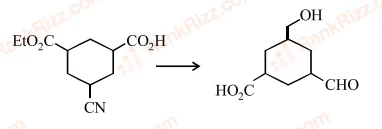
  1. A

    (i) NaBH, (ii) Raney Ni/H, (iii) HO

  2. B

    (i) LiAlH, (ii) HO

  3. C

    (i) BH, (ii) DIBAL-H, (iii) HO

  4. D

    (i) BH, (ii) SnCl/HCl, (iii) HO
JEE MAIN 2017 · 02 APR OFFLINENucleophilic addition reactions of carbonyl compoundsTRANSCRIBED

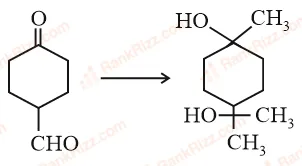
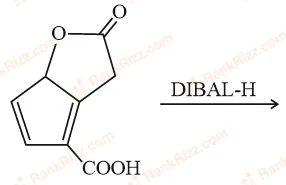
The correct sequence of reagents for the following conversion will be

  1. A

    CHMgBr, H/CHOH, AgNHOH

  2. B

    CHMgBr, AgNHOH, H/CHOH

  3. C

    AgNHOH, CHMgBr, H/CHOH

  4. D

    AgNHOH, H/CHOH, CHMgBr

JEE MAIN 2017 · 09 APR ONLINENucleophilic addition reactions of carbonyl compoundsTRANSCRIBED

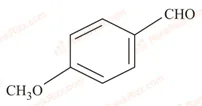
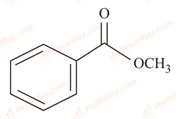
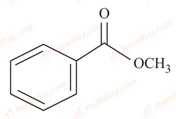
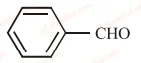
A compound of molecular formula CHO reacts with acetophenone to form a single cross-aldol product in the presence of base. The same compound on reaction with concentrated NaOH forms benzyl alcohol as one of the products. The structure of the compound is:

  1. A
    page12_img6
  2. B
    page12_img7
  3. C
    page12_img7
  4. D
    page12_img8
JEE MAIN 2017 · 02 APR OFFLINEPreparation of aldehydes and ketonesTRANSCRIBED

The major product obtained in the following reaction is

  1. A
  2. B
  3. C
  4. D
JEE MAIN 2016 · 10 APR ONLINENucleophilic addition reactions of carbonyl compoundsTRANSCRIBED

The correct statement about the synthesis of erythritol used in the preparation of PETN is

  1. A

    The synthesis requires three aldol condensations and one Cannizzaro reaction.

  2. B

    Alpha hydrogen of ethanol and methanol are involved in this reaction.

  3. C

    The synthesis requires two aldol condensation and two Cannizzaro reactions.

  4. D

    The synthesis requires four aldol condensations between methanol and ethanol.

JEE MAIN 2015 · 04 APR OFFLINEPreparation of aldehydes and ketonesTRANSCRIBED

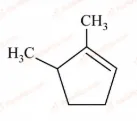
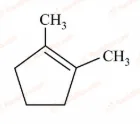
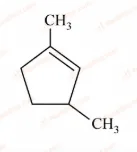
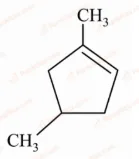
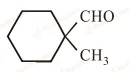
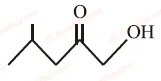
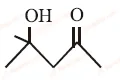
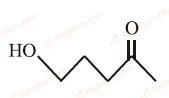
Which compound would give 5-keto-2-methyl hexanal upon ozonolysis?

  1. A
    image
  2. B
    image
  3. C
    image
  4. D
    image
JEE MAIN 2015 · 04 APR OFFLINEPreparation of aldehydes and ketonesTRANSCRIBED

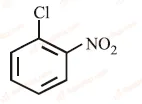
In the following sequence of reactions:
Toluene A B C
The Product C is:

  1. A

  2. B

  3. C

  4. D

JEE MAIN 2015 · 11 APR ONLINENucleophilic addition reactions of carbonyl compoundsTRANSCRIBED

In the reaction sequence ; the product B is:

  1. A

  2. B
    image
  3. C

  4. D

JEE MAIN 2014 · 11 APR ONLINENucleophilic addition reactions of carbonyl compoundsTRANSCRIBED

Tischenko reaction is a modification of:

  1. A

    Aldol condensation

  2. B

    Claisen condensation

  3. C

    Cannizzaro reaction

  4. D

    Pinacol-pinacolon reaction

JEE MAIN 2014 · 09 APR ONLINENucleophilic addition reactions of carbonyl compoundsTRANSCRIBED

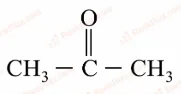
Which is the major product formed when acetone is heated with iodine and potassium hydroxide?

  1. A

    Acetophenone

  2. B

    Iodoform

  3. C

    Iodoacetone

  4. D

    Acetic acid

JEE MAIN 2014 · 06 APR OFFLINEPreparation of aldehydes and ketonesTRANSCRIBED

In the reaction, , the product C is:

  1. A

    Acetaldehyde

  2. B

    Acetylene

  3. C

    Ethylene

  4. D

    Acetyl chloride

JEE MAIN 2014 · 09 APR ONLINENucleophilic addition reactions of carbonyl compoundsTRANSCRIBED

Which one of the following reactions will not result in the formation of carbon-carbon bond?

  1. A

    Friedel Craft's acylation

  2. B

    Reimer-Tieman reaction

  3. C

    Cannizaro reaction

  4. D

    Wurtz reaction

JEE MAIN 2014 · 11 APR ONLINEPreparation of aldehydes and ketonesTRANSCRIBED

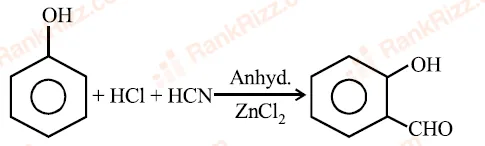
The following reaction is known as:

  1. A

    Perkin reaction

  2. B

    Gatterman-Koch Formylation

  3. C

    Kolbe's reaction

  4. D

    Gattermann reaction

JEE MAIN 2013 · 22 APR ONLINEDistinguishing tests for aldehydes and ketonesTRANSCRIBED

A major component of Borsch reagent is obtained by reacting hydrazine hydrate with which of the following?

  1. A
  2. B
  3. C
  4. D
JEE MAIN 2013 · 22 APR ONLINENucleophilic addition reactions of carbonyl compoundsTRANSCRIBED

Clemmensen reduction of a ketone is carried out in the presence of :

  1. A

    LiAlH

  2. B

    Zn - Hg with HCl

  3. C

    Glycol with KOH

  4. D

    H with Pt as catalyst

JEE MAIN 2013 · 25 APR ONLINENucleophilic addition reactions of carbonyl compoundsTRANSCRIBED

Cannizaro's reaction is not given by :

  1. A
  2. B
  3. C

  4. D

    HCHO

JEE MAIN 2013 · 23 APR ONLINENucleophilic addition reactions of carbonyl compoundsTRANSCRIBED

Which of the following is the product of aldol condensation?

  1. A
  2. B
  3. C
  4. D
JEE MAIN 2013 · 25 APR ONLINENucleophilic addition reactions of carbonyl compoundsTRANSCRIBED

Which of the following reagent(s) used for the conversion?

  1. A

    glycol/LiAlH/HO

  2. B

    glycol/ NaH/HO

  3. C

    LiAlH

  4. D

    NaBH

JEE MAIN 2013 · 09 APR ONLINEDistinguishing tests for aldehydes and ketonesTRANSCRIBED

Formaldehyde can be distinguished from acetaldehyde by the use of :

  1. A

    Schiff's reagent

  2. B

    Tollen's reagent

  3. C

    /Alkali

  4. D

    Fehling's solution

JEE MAIN 2012Oxidation and reduction of carbonyl compoundsTRANSCRIBED

Iodoform can be prepared from all except :

  1. A

    Ethyl methyl ketone

  2. B

    Isopropyl alcohol

  3. C

    Methylbutanone

  4. D

    Isobutyl alcohol