JEE MAIN 2018 · 15 APR S2Reactions of carboxylic acidsTRANSCRIBED
The increasing order of the acidity of the following carboxylic acids is:
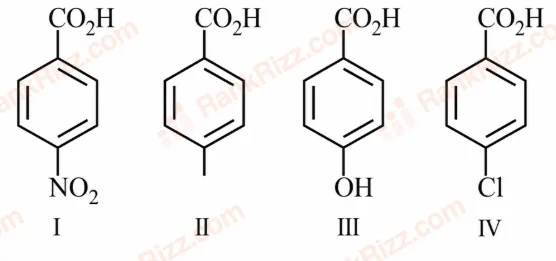
- A
III < II < IV < I
- B
I < III < II < IV
- C
IV < II < III < I
- D
II < IV < III < I
Every Carboxylic Acids and Derivatives question JEE Main has set, grouped by the idea it tests rather than the order of the syllabus. 76 questions across 4 distinct ideas. Free to read, answer key on every one.
Questions
76
Distinct ideas
4
Share of marks
1.4%
Difficulty
HARD
A chapter is not one subject — it is a handful of procedures the examiner reuses. These are the ones Carboxylic Acids and Derivatives questions actually test.
61–76 OF 76 · NEWEST FIRST
The increasing order of the acidity of the following carboxylic acids is:
III < II < IV < I
I < III < II < IV
IV < II < III < I
II < IV < III < I
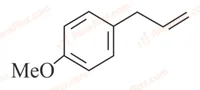
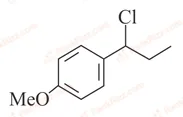
The major product B formed in the following reaction sequence is:
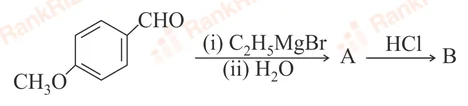
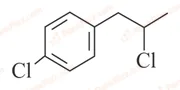
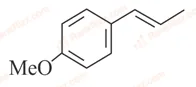
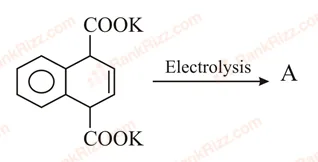
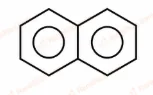
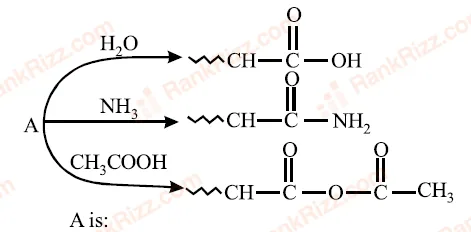
A is:
In the presence of a small amount of phosphorous, aliphatic carboxylic acid reacts with chlorine or bromine to yield a reaction in which, -hydrogen is been replaced by halogen. This reaction is known as
Etard reaction
Wolff-Kischner reaction
Rosenmund reaction
Hell-volhard-zelinsky reaction
The gas liberated by the electrolysis of Dipotassium succinate solution is:
Ethane
Ethyne
Ethene
Propene
An organic compound A, CHO; reacts with HO, NH and CHCOOH as described below:
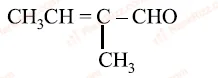
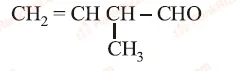
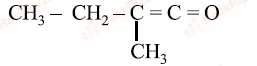
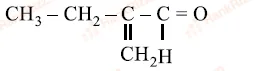
Among the following organic acids, the acid present in rancid butter is:
Pyruvic acid
Acetic acid
Butyric acid
Lactic acid
The strongest acid amongst the following compounds is:
Sodium ethoxide has reacted with ethanoyl chloride. The compound that is produced in the above reaction is:
2-Butanone
Ethyl chloride
Ethyl ethanoate
Diethyl ether
A liquid was mixed with ethanol and a drop of concentrated was added. A compound with a fruity smell was formed. The liquid was:
The correct order of increasing acid strength of the compounds is (a) (b) (c)
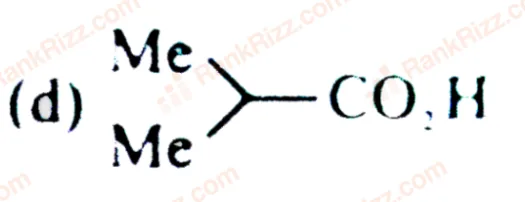
b < d < a < c
d < a < c < b
d < a < b < c
a < d < c < b
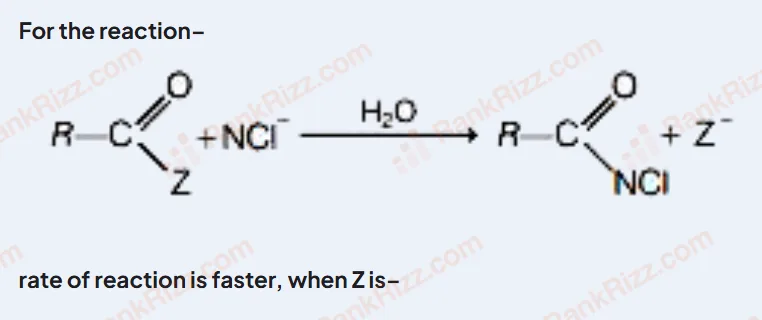
Cl
NH
OCH
OCOR
Among the following acids which has the lowest p value
CHCOOH
HCOOH
(CH)COOH
CHCHCOOH
Rate of the reaction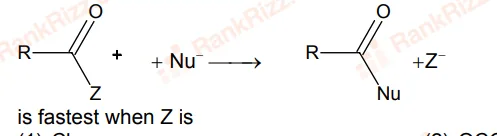
is fastest when Z is
Cl
Consider the acidity of the carboxylic acids:
PhCOOH
On mixing ethyl acetate with aqueous sodium chloride, the composition of the resultant solution is
OTHER CHEMISTRY CHAPTERS