RankRizzStart free

JEE Advanced 2016 Paper 2 Question Paper

All 54 questions of JEE Advanced 2016 Paper 2, in the order they were asked. Pick an answer on any question to check it against the key. Free to read, nothing to download.

Questions

54

Physics · Chemistry · Mathematics

Answer key

54

questions with a checked key

Under review

0

key not yet trusted

Price

Free

no sign-up

Physics

Q1JEE ADVANCED 2016 · PAPER 2Nuclear fission, fusion and Q-valueTRANSCRIBED

The electrostatic energy of Z protons uniformly distributed throughout a spherical nucleus of radius R is given by

The measured masses of the neutron, and are 1.008665 u, 1.007825 u, 15.000109 u and 15.003065 u,respectively. Given that the radii of both the and nuclei are same, (c is the speed oflight) and . Assumingthat the difference between the binding energies of and is purely due to the electrostatic energy, the radius of either of the nuclei is

  1. A

    2.85 fm

  2. B

    3.03 fm

  3. C

    3.42 fm

  4. D

    3.80 fm

Q2JEE ADVANCED 2016 · PAPER 2Radioactivity: decay law, half-life and decay modesTRANSCRIBED

An accident in a nuclear laboratory resulted in deposition of a certain amount of radioactive material of half-life 18 days inside the laboratory. Tests revealed that the radiation was 64 times more than the permissible level required for safe operation of the laboratory. What is the minimum number of days after which the laboratory can be considered safe for use?

  1. A

    64

  2. B

    90

  3. C

    108

  4. D

    120

Q3JEE ADVANCED 2016 · PAPER 2Multi-step processes and gas-piston-spring systemsTRANSCRIBED

A gas is enclosed in a cylinder with a movable frictionless piston. Its initial thermodynamic state at pressure and volume changes to a final state at and in an adiabatic quasi-static process, such that = constant. Consider another thermodynamic process that brings the system from the same initial state to the same final state in two steps: an isobaric expansion at . followed by an isochoric (isovolumetric) process at volume . The amount of heat supplied to the system in the two-step process is approximately

  1. A

    112 J

  2. B

    294 J

  3. C

    588 J

  4. D

    813 J

Q4JEE ADVANCED 2016 · PAPER 2Temperature scales and thermal expansionTRANSCRIBED

The ends Q and of two thin wires, PQ and RS, are soldered (joined) together. Initially each of the wires has a length of 1 m at . Now the end P is maintained at , while the end S is heated and maintained at . The system is thermally insulated from its surroundings. If the thermal conductivity of wire PQ is twice that of the wire RS and the coefficient of linear thermal expansion of PQ is the change in length of the wire PQ is

  1. A

    0.78 mm

  2. B

    0.90 mm

  3. C

    1.56 mm

  4. D

    2.34 mm

Q5JEE ADVANCED 2016 · PAPER 2Combinations of lenses and mirrorsTRANSCRIBED

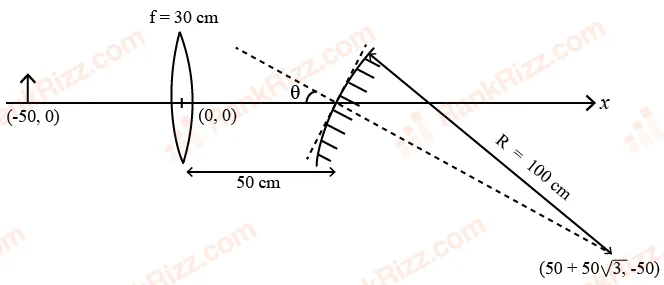
A small object is placed 50 cm to the left of a thin convex lens of focal length 30 cm. A convex spherical mirror of radius of curvature 100 cm is placed to the right of the lens at a distance of 50 cm. The mirror is tilted such that the axis of the mirror is at an angle to the axis of the lens, as shown in the figure.

If the origin of the coordinate system is taken to be at the center of the lens, the coordinates (in cm) of the point (x,y) at which the image is formed are

  1. A

  2. B

  3. C

  4. D

Q6JEE ADVANCED 2016 · PAPER 2Vernier calipers: least count and zero errorTRANSCRIBED

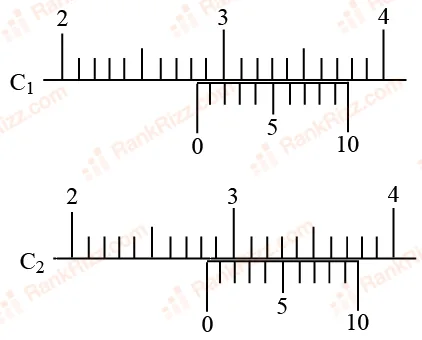
There are two Vernier calipers both of which have 1 cm divided into 10 equal divisions on the main scale. The Vernier scale of one of the calipers has 10 equal divisions that correspond to 9 main scale divisions. The Vernier scale of the other caliper has 10 equal divisions that correspond to 11 main scale divisions. The readings of the two calipers are shown in the figure. The measured values (in cm) by calipers and , respectively, are

  1. A

    2.85 and 2.82

  2. B

    2.87 and 2.83

  3. C

    2.87 and 2.86

  4. D

    2.87 and 2.87

Q7JEE ADVANCED 2016 · PAPER 2Angular momentum of particles and rigid bodiesTRANSCRIBED

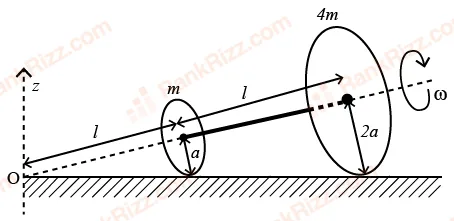
Two thin circular discs of mass m and 4m, having radii of a and 2a, respectively, are rigidly fixed by a mass less, rigid rod of length through their centers. This assembly is laid on a firm and flat surface, and set rolling without slipping on the surface so that the angular speed about the axis of the rod is . The angular momentum of the entire assembly about the point ‘O’ is (see the figure). Which of the following statement(s) is(are) true?

  1. A

    The center of mass of the assembly rotates aboutthe z-axis with an angularspeed of

  2. B

    The magnitude of angular momentum of center of mass of the assembly about the point O is

  3. C

    The magnitude of angular momentumofthe assembly aboutits center of mass is

  4. D

    The magnitude of the z-component of is

Q8JEE ADVANCED 2016 · PAPER 2Photoelectric effect and Einstein's equationTRANSCRIBED

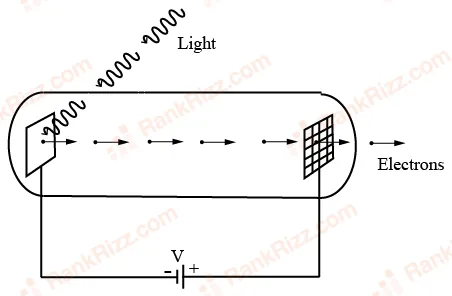
Light of wave length falls on a cathode plate inside a vacuumtube as shown in the figure. The work function of the cathode surface is and the anode is a wire mesh of conducting material kept at a distance d from the cathode. A potential difference V is maintained between the electrodes. If the minimum de Broglie wavelength of the electrons passing through the anode is , which of the following statement(s) is(are) true?

  1. A

    decreases with increase in and

  2. B

    is approximately halved, if d is doubled

  3. C

    For large potential difference (V >> \phi/e), \lambda_e is approximately halved if V is made four times

  4. D

    increases at the same rate as for \lambda_{ph} < hc/\phi

Q9JEE ADVANCED 2016 · PAPER 2Errors in measurement and significant figuresTRANSCRIBED

In an experiment to determine the acceleration due to gravity g, the formula used for the time period of a periodic motion is . The values of R and r are measured to be mm and mm, respectively. In five successive measurements, the time period is found to be 0.52 s, 0.56 s, 0.57 s, 0.54 s and 0.59 s. The least count of the watch used for the measurement of time period is 0.01 s. Which of the following statement(s) is(are) true?

  1. A

    The error in the measurement of r is 10%

  2. B

    The error in the measurement of T is 3.57%

  3. C

    The error in the measurement of T is 2%

  4. D

    The error in the determined value of g is 11%

Q10JEE ADVANCED 2016 · PAPER 2Galvanometer conversion to ammeter and voltmeterTRANSCRIBED

Consider two identical galvanometers and two identical resistors with resistance R. If the internal resistance of the galvanometers R_c < \frac{R}{2}, which of the following statement(s) about any one of the galvanometers is(are) true?

  1. A

    The maximum voltage range is obtained when all the components are connected in series

  2. B

    The maximum voltage range is obtained when the two resistors and one galvanometer are connected in series, and the second galvanometer is connected in parallel to the first galvanometer

  3. C

    The maximum current range is obtained when all the components are connected in parallel

  4. D

    The maximum current rangeis obtained when the two galvanometers are connected in series and the combination is connected in parallel with both the resistors

Q11JEE ADVANCED 2016 · PAPER 2RC circuits: charging and dischargingTRANSCRIBED

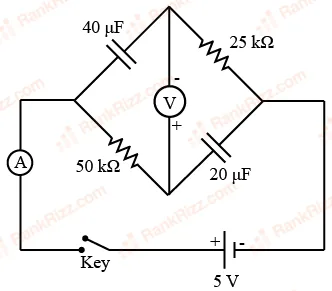
In the circuit shown below, the key is pressed at time t=0. Which of the following statement(s) is(are) true?

  1. A

    The voltmeter displays —5 V as soon as the key is pressed, and displays +5 V after a long time

  2. B

    The voltmeter will display 0 V at time c = ln 2 seconds

  3. C

    The current in the ammeter becomes of the initial value after 1 second

  4. D

    The current in the ammeter becomes zero after a long time

Q12JEE ADVANCED 2016 · PAPER 2Spring-block oscillationsTRANSCRIBED

A block with mass M is connected by a massless spring with stiffness constant k to a rigid wall and moves without friction on a horizontal surface. The block oscillates with small amplitude A about an equilibrium position . Consider two cases:
(i) when the block is at ; and
(ii) when the block is at .
In both thecases, a particle with mass m(< M) is softly placed on the block after which they stick to each other. Which of the following statement(s) is(are) true about the motion after the mass mis placed on the mass M ?

  1. A

    The amplitude of oscillation in thefirst case changes by a factor of , where as in the secondcase it remains unchanged

  2. B

    The final time period of oscillation in both the cases is same

  3. C

    The total energy decreases in both the cases

  4. D

    The instantaneous speed at of the combined masses decreases in both the cases

Q13JEE ADVANCED 2016 · PAPER 2Young's double slit experiment: fringe width and intensityTRANSCRIBED

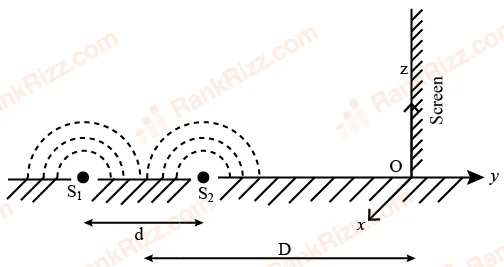
While conducting the Young’s double slit experiment, a student replaced the two slits with a large opaque plate in the x-y plane containing two small holes that act as two coherent point sources emitting light of wavelength 600 nm. The student mistakenly placed the screen parallel to the x-z plane (for z > 0) at a distance D = 3 m from the mid-point of S,S,, as shown schematically in the figure. The distance between the sources d = 0.6003 mm. The origin O is at the intersection of the screen and the line joining . Which of the following is(are) true of the intensity pattern on the screen?

  1. A

    Straight bright and dark bands parallel to the x-axis

  2. B

    The region very close to the point O will be dark

  3. C

    Hyperbolic bright and dark bands with foci symmetrically placed about O in the x-direction

  4. D

    Semi circular bright and dark bands centered at point O

Q14JEE ADVANCED 2016 · PAPER 2Motional emf in moving rods and loopsTRANSCRIBED

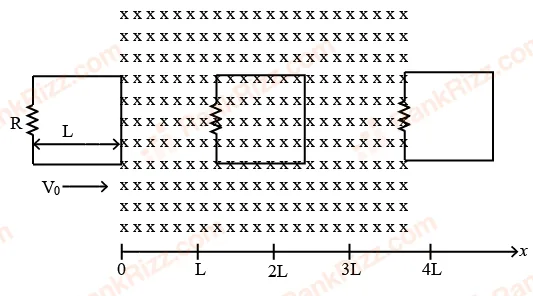
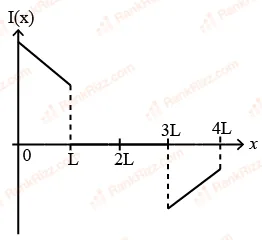
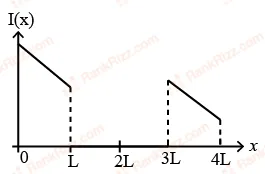
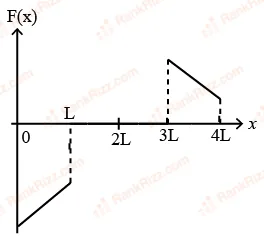
A rigid wire loop of square shape having side of length L and resistance R is moving along the x-axis with a constant velocity in the plane of the paper. At t = 0, the right edge of the loop enters a region of length 3L where there is a uniform magnetic field , into the plane of the paper, as shown in the figure. For sufficiently large , the loop eventually crosses the region. Let x be the location of the right edge of the loop. Let v(x), I(x) and F(x) represent the velocity of the loop, current in the loop, and force on the loop, respectively, as a function of x. Counter-clockwise current is taken as positive.

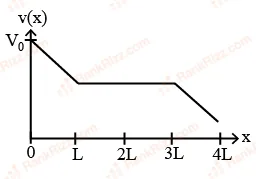
Which of the following schematic plot(s) is(are) correct? (Ignore gravity)

  1. A
  2. B
  3. C
  4. D
Q15JEE ADVANCED 2016 · PAPER 2Calculus, graphs and approximations used in physicsTRANSCRIBED

The distance r of the block at time t is

  1. A

  2. B

  3. C

  4. D

Q16JEE ADVANCED 2016 · PAPER 2Calculus, graphs and approximations used in physicsTRANSCRIBED

The net reaction of the disc on the block is

  1. A

  2. B

  3. C

  4. D

Q17JEE ADVANCED 2016 · PAPER 2Relation between field and potential, equipotential surfacesTRANSCRIBED

Which one of the following statementsis correct?

  1. A

    The balls will stick to the top plate and remain there

  2. B

    The balls will bounce back to the bottom plate carrying the same charge they went up with

  3. C

    The balls will bounce back to the bottom plate carrying the opposite charge they went up with

  4. D

    The balls will execute simple harmonic motion between the two plates

Q18JEE ADVANCED 2016 · PAPER 2Calculus, graphs and approximations used in physicsTRANSCRIBED

The average current in the steady state registered by the ammeter in the circuit will be

  1. A

    zero

  2. B

    proportional to the potential

  3. C

    proportional to

  4. D

    proportional to

Chemistry

Q19JEE ADVANCED 2016 · PAPER 2Electrode potentials, electrochemical series and cell EMFTRANSCRIBED

For the following electrochemical cell at 298 K,

and when .
Given :
The value of x is

  1. A

    -2

  2. B

    -1

  3. C

    1

  4. D

    2

Q20JEE ADVANCED 2016 · PAPER 2Properties of colloids and coagulationTRANSCRIBED

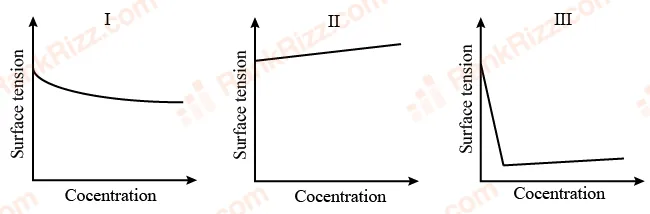
The qualitative sketches I, II and III given below show the variation of surface tension with molar concentration of three different aqueous solutions of KCl, and at room temperature. The correct assignment of the sketches is

  1. A

    I. II. III.

  2. B

    I. II. III.

  3. C

    I. II. III.

  4. D

    I. II. III.

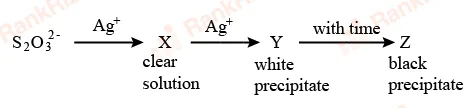
Q21JEE ADVANCED 2016 · PAPER 2Analysis of anionsTRANSCRIBED

In the following reaction sequence in aqueous solution, the species X, Y and Z, respectively, are

  1. A

  2. B

  3. C

  4. D

Q22JEE ADVANCED 2016 · PAPER 2VSEPR theory and shapes of molecules and ionsTRANSCRIBED

The geometries of the ammonia complexes of and , respectively, are

  1. A

    octahedral, square planar and tetrahedral

  2. B

    square planar, octahedral and tetrahedral

  3. C

    tetrahedral, square planar and octahedral

  4. D

    octahedral, tetrahedral and square planar

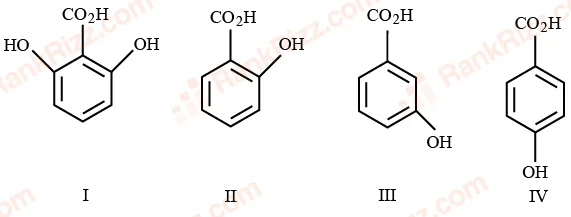
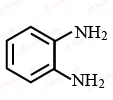
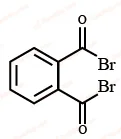
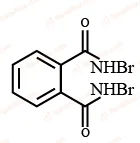
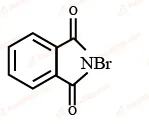
Q23JEE ADVANCED 2016 · PAPER 2Reactions of carboxylic acidsTRANSCRIBED

The correct order of acidity for the following compounds is

  1. A

    I &gt; II &gt; III &gt; IV

  2. B

    III &gt; I &gt; II &gt; IV

  3. C

    III &gt; IV &gt; II &gt; I

  4. D

    I &gt; III &gt; IV &gt; II

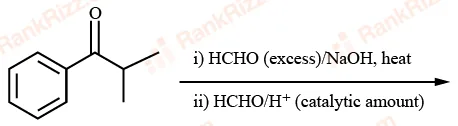
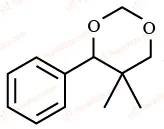
Q24JEE ADVANCED 2016 · PAPER 2Aldol condensation, Cannizzaro and related reactionsTRANSCRIBED

The major product of the following reaction sequence is

  1. A
  2. B
  3. C
  4. D
Q25JEE ADVANCED 2016 · PAPER 2Molecular orbital theory of diatomic speciesTRANSCRIBED

According to Molecular Orbital Theory,

  1. A

    is expected to be diamagnetic

  2. B

    is expected to have a longer bond length than

  3. C

    and have the same bond order

  4. D

    has the same energy as two isolated He atoms

Q26JEE ADVANCED 2016 · PAPER 2Raoult's law, ideal and non-ideal solutionsTRANSCRIBED

Mixture(s) showing positive deviation from Raoult’s law at is(are)

  1. A

    carbon tetrachloride + methanol

  2. B

    carbon disulphide + acetone

  3. C

    benzene + toluene

  4. D

    phenol + aniline

Q27JEE ADVANCED 2016 · PAPER 2Voids, radius ratio and structures of ionic solidsTRANSCRIBED

The CORRECT statement(s) for cubic close packed (ccp) three dimensional structure is(are)

  1. A

    The number of the nearest neighbours of an atom present in the topmost layer is 12

  2. B

    The efficiency of atom packing is 74%

  3. C

    The number of octahedral and tetrahedral voids per atom are 1 and 2, respectively

  4. D

    The unit cell edge length is times the radius of the atom

Q28JEE ADVANCED 2016 · PAPER 2Extraction of Fe, Cu, Zn, Al, Ag and AuTRANSCRIBED

Extraction of copper from copper pyrite involves

  1. A

    crushing followed by concentration of the ore by froth-flotation.

  2. B

    removal of iron as slag

  3. C

    self-reduction step to produce ‘blister copper’following evolution of

  4. D

    refining of ‘blister copper’ by carbon reduction

Q29JEE ADVANCED 2016 · PAPER 2Phosphorus and its compoundsTRANSCRIBED

The nitrogen containing compound producedin the reaction of with

  1. A

    can also be prepared by reaction of and

  2. B

    is diamagnetic

  3. C

    contains one N-N bond

  4. D

    reacts with Na metal producing a brown gas

Q30JEE ADVANCED 2016 · PAPER 2Carbohydrates: classification and monosaccharidesTRANSCRIBED

For ‘invert sugar’, the correct statement(s) is(are)
(Given: specific rotations of( +)-sucrose, (+)-maltose, L-(—)-glucose and L-(+)-fructose in aqueous solution are and , respectively)

  1. A

    ‘invert sugar’ is prepared by acid catalyzed hydrolysis of maltose

  2. B

    ‘invert sugar’ is an equimolar mixture of D-(+)-glucose and D-(-)-fructose

  3. C

    specific rotation of‘invert sugar’ is

  4. D

    on reaction with water, ‘invert sugar’ forms saccharic acid as one of the products

Q31JEE ADVANCED 2016 · PAPER 2Reactions of carboxylic acidsTRANSCRIBED

Reagent(s) which can be used to bring about the following transformation is(are)

  1. A

    in

  2. B

    in

  3. C

    in

  4. D

    Raney in

Q32JEE ADVANCED 2016 · PAPER 2Benzene and aromatic hydrocarbons: structure and preparationTRANSCRIBED

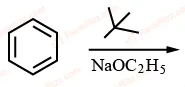
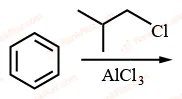
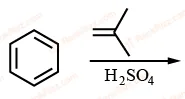
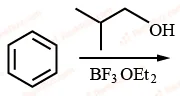
Among the following, reaction(s) which gives(give) tert-butyl benzene as the major product is(are)

  1. A
  2. B
  3. C
  4. D
Q33JEE ADVANCED 2016 · PAPER 2Resonance and hyperconjugationTRANSCRIBED

The equilibrium constant for this reaction at 298 K, in terms of , is

  1. A

  2. B

  3. C

  4. D

Q34JEE ADVANCED 2016 · PAPER 2Law of mass action and equilibrium constants Kc and KpTRANSCRIBED

The INCORRECT statement amongthe following, for this reaction, is

  1. A

    Decreasein the total pressure will result in formation of more moles of gaseous X

  2. B

    At the start of the reaction, dissociation of gaseous takes place spontaneously

  3. C

  4. D

    K_c &lt; 1

Q36JEE ADVANCED 2016 · PAPER 2Diazonium saltsTRANSCRIBED

The compound T is

  1. A

    glycine

  2. B

    alanine

  3. C

    valine

  4. D

    serine

Mathematics

Q37JEE ADVANCED 2016 · PAPER 2Types of matrices and matrix algebraTRANSCRIBED

Let and I be the identity matrix of order 3. If is a matrix such that , then equals

  1. A

    52

  2. B

    103

  3. C

    201

  4. D

    205

Q38JEE ADVANCED 2016 · PAPER 2Arithmetic progressionTRANSCRIBED

Let b_i &gt; 1 for i = 1, 2, ......, 101. Suppose are in Arithmetic Progression (A.P.) with the common difference . Suppose are in A.P. such that and . If and , then

  1. A

    s &gt; t and a_{101} &gt; b_{101}

  2. B

    s &gt; t and a_{101} &lt; b_{101}

  3. C

    s &lt; t and a_{101} &gt; b_{101}

  4. D

    s &lt; t and a_{101} &lt; b_{101}

Q39JEE ADVANCED 2016 · PAPER 2Trigonometric series and productsTRANSCRIBED

The value of is equal to

  1. A

  2. B

  3. C

  4. D

Q40JEE ADVANCED 2016 · PAPER 2Definite integrals: properties and King's ruleTRANSCRIBED

The value of is equal to

  1. A

  2. B

  3. C

  4. D

Q41JEE ADVANCED 2016 · PAPER 2Area between curvesTRANSCRIBED

Area of the region is equal to

  1. A

  2. B

  3. C

  4. D

Q42JEE ADVANCED 2016 · PAPER 2Line and plane: intersection, coplanarity and projectionTRANSCRIBED

Let P be the image of the point (3,1,7) with respect to the plane . Then the equation of the plane passing through P and containing the straight line is

  1. A

  2. B

  3. C

  4. D

Q43JEE ADVANCED 2016 · PAPER 2Definite integral as limit of a sumTRANSCRIBED

Let , for all x > 0. Then

  1. A

  2. B

  3. C

  4. D

Q44JEE ADVANCED 2016 · PAPER 2Differentiability at a pointTRANSCRIBED

Let and be bedefined by . Then f is

  1. A

    differentiable at x = 0 if a = 0 and b = 1

  2. B

    differentiable at x = 1 if a = 1 and b = 0

  3. C

    NOT differentiable at x = 0 if a = 1 and b = 0

  4. D

    NOT differentiable at x = 1 if a = 1 and b = 1

Q45JEE ADVANCED 2016 · PAPER 2Optimization word and geometry problemsTRANSCRIBED

Let and be be twice differentiable functions such that and are continuous functions on R. Suppose and . If , then

  1. A

    f has a local minimum at x = 2

  2. B

    f has a local maximum at x = 2

  3. C

    f''(2) &gt; f(2)

  4. D

    for at least one .

Q46JEE ADVANCED 2016 · PAPER 2Continuity at a pointTRANSCRIBED

Let and be functions defined by and , where denotes the greatest integer less than or equal to y for . Then

  1. A

    f is discontinuous exactly at three points in

  2. B

    f is discontinuous exactly at four points in

  3. C

    g is NOT differentiable exactly at four points in

  4. D

    g is NOT differentiable exactly at five points in

Q47JEE ADVANCED 2016 · PAPER 2Locus and regions in the Argand planeTRANSCRIBED

Let and . Suppose , where . If and , then (x, y) lies on

  1. A

    the circle with radius and center for a &gt; 0, b \neq 0

  2. B

    the circle with radius and center for a &lt; 0, b \neq 0

  3. C

    the x-axis for

  4. D

    the y-axis for

Q48JEE ADVANCED 2016 · PAPER 2Normals to a parabolaTRANSCRIBED

Let P be the point on the parabola which is at the shortest distance from the center S of the circle . Let Q be the pomt on the circle dividing the line segment SP internally. Then

  1. A

  2. B

  3. C

    the x-intercept of the normal to the parabola at P is 6

  4. D

    the slope of the tangent tothe circle at Q is

Q49JEE ADVANCED 2016 · PAPER 2Systems of linear equationsTRANSCRIBED

Let . Consider the system of linear equations


Which of the following statement(s) is(are) correct?

  1. A

    If a = -3, then the system has infinitely many solutionsforall values of and

  2. B

    If , then the system has a unique solution for all values of and

  3. C

    If , then the systemhasinfinitely many solutions for a = -3

  4. D

    If , then the systemhasinfinitely many solutions for a = -3

Q50JEE ADVANCED 2016 · PAPER 2Vector (cross) product and areaTRANSCRIBED

Let be a unit vector in and . Given that there exists a vector in such that and . Which of the following statement(s) is(are) correct?

  1. A

    There is exactly one choice for such

  2. B

    There are infinitely many choices for such

  3. C

    If lies in the xy-plane then

  4. D

    If lies in the xz-plane then

Q51JEE ADVANCED 2016 · PAPER 2Equation of a circle in various formsTRANSCRIBED

P(X &gt; Y) is

  1. A

  2. B

  3. C

  4. D

Q52JEE ADVANCED 2016 · PAPER 2Equation of a circle in various formsTRANSCRIBED

is

  1. A

  2. B

  3. C

  4. D

Q53JEE ADVANCED 2016 · PAPER 2Equation of a circle in various formsTRANSCRIBED

The orthocentre of the triangle is

  1. A

  2. B

  3. C

  4. D

Q54JEE ADVANCED 2016 · PAPER 2Tangents to an ellipseTRANSCRIBED

If the tangents to the ellipse at M and N meet at R and the normal to the parabola at M meets the x-axis at Q, then the ratio of area of the triangle MQR to area of the quadrilateral is

  1. A

    3 : 4

  2. B

    4 : 5

  3. C

    5 : 8

  4. D

    2 : 3