RankRizzStart free

JEE Advanced 2014 Paper 2 Question Paper

All 60 questions of JEE Advanced 2014 Paper 2, in the order they were asked. Pick an answer on any question to check it against the key. Free to read, nothing to download.

Questions

60

Physics · Chemistry · Mathematics

Answer key

60

questions with a checked key

Under review

0

key not yet trusted

Price

Free

no sign-up

Physics

Q1JEE ADVANCED 2014 · PAPER 2Potential energy, conservative forces and energy curvesTRANSCRIBED

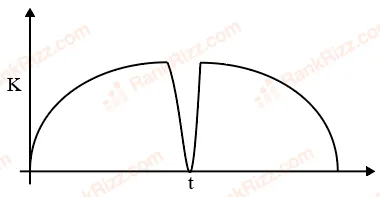
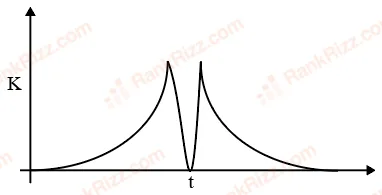
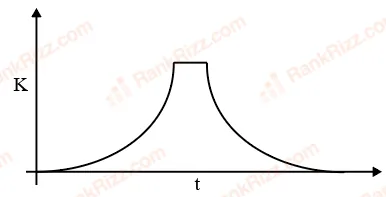
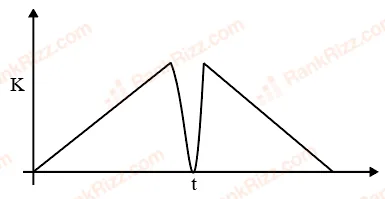
A tennis ball is dropped on a horizontal smooth surface. It bounces back to its original position after hitting the surface. The force on the ball during the collision is proportional to the length of compression of the ball. Which one of the following sketches describes the variation of its kinetic energy K with time t most appropriately? The figures are only illustrative and not to the scale.

  1. A
  2. B
  3. C
  4. D
Q2JEE ADVANCED 2014 · PAPER 2Newton's laws, free-body diagrams and equilibrium of a particleTRANSCRIBED

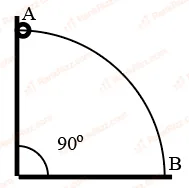
A wire, which passes through the hole in a small bead, is bent in the form of quarter of a circle. The wire is fixed vertically on ground as shown in the figure. The bead is released from near the top of the wire and it slides along the wire without friction. As the bead moves from A to B, the force it applies on the wire is

  1. A

    always radially outwards.

  2. B

    always radially inwards

  3. C

    radially outwards initially and radially inwards later.

  4. D

    radially inwards initially and radially outwards later.

Q3JEE ADVANCED 2014 · PAPER 2Meter bridgeTRANSCRIBED

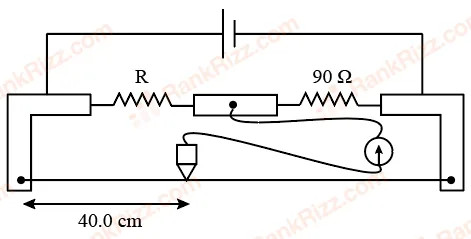
During an experiment with ametre bridge, the galvanometer shows a null point when the jockey is pressed at 40.0 cm using a standard resistance of ,as shown in the figure. The least count of the scale used in the metre bridge is 1 mm. The unknown resistance is

  1. A

  2. B

  3. C

  4. D

Q4JEE ADVANCED 2014 · PAPER 2Electric field of continuous charge distributionsTRANSCRIBED

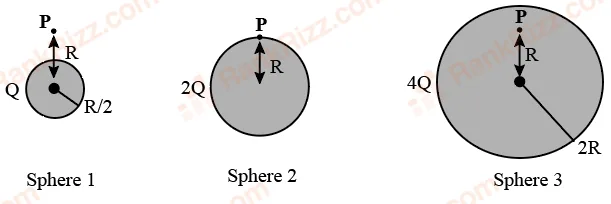
Charges Q, 2Q and 4Q are uniformly distributed in three dielectric solid spheres 1, 2 and 3 of radii R/2, R and 2R, respectively, as shown in figure. If magnitudes of the electric fields at point P at a distance R from the center of spheres 1, 2 and 3 are and respectively, then

  1. A

    E_1 > E_2 > E_3

  2. B

    E_3 > E_1 > E_2

  3. C

    E_2 > E_1 > E_3

  4. D

    E_3 > E_2 > E_1

Q5JEE ADVANCED 2014 · PAPER 2Prism: deviation and dispersionTRANSCRIBED

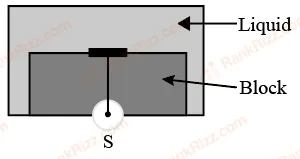
A point source S is placed at the bottom of a transparent block of height 10 mm and refractive index 2.72. It is immersed in a lower refractive index liquid as shown in the figure. It is found that the light emerging from the block to the liquid forms a circular bright spot of diameter 11.54 mm on the top of the block. The refractive index of the liquid is

  1. A

    1.21

  2. B

    1.30

  3. C

    1.36

  4. D

    1.42

Q6JEE ADVANCED 2014 · PAPER 2Thermal radiation: Stefan's law, Wien's law and Kirchhoff's lawTRANSCRIBED

Parallel rays of light of intensity are incident on a spherical black body kept in surroundings of temperature 300 K. Take Stefan-Boltzmann constant and assume that the energy exchange with the surroundingsis only through radiation. The final steady state temperature of the black body is close to

  1. A

    330 K

  2. B

    660 K

  3. C

    990 K

  4. D

    1550 K

Q7JEE ADVANCED 2014 · PAPER 2Photoelectric effect and Einstein's equationTRANSCRIBED

A metal surface is illuminated by light of two different wavelengths 248 nm and 310 nm. The maximum speeds of the photoelectrons corresponding to these wavelengths are and ,respectively. If the ratio and hc = 1240 eV nm, the work function of the metal is nearly

  1. A

    3.7 eV

  2. B

    3.2 eV

  3. C

    2.8 eV

  4. D

    2.5 eV

Q8JEE ADVANCED 2014 · PAPER 2Hydrogen spectrum and spectral seriesTRANSCRIBED

If is the wavelength of X-ray line of copper (atomic number 29) and is the wavelength of the X-ray line of molybdenum (atomic number 42), then the ratio is close to

  1. A

    1.99

  2. B

    2.14

  3. C

    0.50

  4. D

    0.48

Q9JEE ADVANCED 2014 · PAPER 2Acceleration due to gravity and its variationTRANSCRIBED

A planet of radius (radius of Earth) has the same mass density as Earth. Scientists dig a well of depth on it and lower a wire of the same length and of linear mass density into it. If the wire is not touching anywhere, the force applied at the top of the wire by a person holding it in place is (take the radius of Earth and the acceleration due to gravity on Earth is )

  1. A

    96 N

  2. B

    108 N

  3. C

    120 N

  4. D

    150 N

Q10JEE ADVANCED 2014 · PAPER 2Surface tension and surface energyTRANSCRIBED

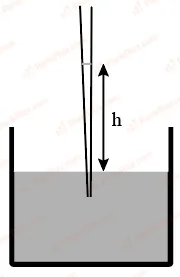
A glass capillary tube is of the shape of a truncated cone with an apex angle so that its two ends have cross sections of different radii. When dipped in water vertically, water rises in it to a height h, where the radius of its cross section is b. If the surface tension of water is S, its density is , and its contact angle with glass is , the value of h will be (g is the acceleration due to gravity)

  1. A

  2. B

  3. C

  4. D

Q11JEE ADVANCED 2014 · PAPER 2Zeroth and first law of thermodynamicsTRANSCRIBED

Consider the partition to be rigidly fixed so that it does not move. When equilibrium is achieved, the final temperature of the gases will be

  1. A

    550 K

  2. B

    525 K

  3. C

    513 K

  4. D

    490 K

Q12JEE ADVANCED 2014 · PAPER 2Multi-step processes and gas-piston-spring systemsTRANSCRIBED

Now consider the partition to be free to move without friction so that the pressure of gases in both compartments is the same. Then total work done by the gases till the time they achieve equilibrium will be

  1. A

    250 R

  2. B

    200 R

  3. C

    100 R

  4. D

    -100 R

Q13JEE ADVANCED 2014 · PAPER 2Equation of continuity and Bernoulli's theoremTRANSCRIBED

If the piston is pushed at a speed of , the air comes out of the nozzle with a speed of

  1. A

  2. B

  3. C

  4. D

Q14JEE ADVANCED 2014 · PAPER 2Equation of continuity and Bernoulli's theoremTRANSCRIBED

If the density of air is and that of the liquid , then for a given piston speed the rate (volume per unit time) at which the liquid is sprayed will be proportional to

  1. A

  2. B

  3. C

  4. D

Q15JEE ADVANCED 2014 · PAPER 2Magnetic field of circular loops, arcs and coilsTRANSCRIBED

When but wires are not touching the loop, it is found that the net magnetic field on the axis of the loop is zero at a height h above the loop. In that case

  1. A

    current in wire 1 and wire 2 is the direction PQ and RS, respectively and

  2. B

    current in wire 1 and wire 2 is the direction PQ and SR, respectively and

  3. C

    current in wire 1 and wire 2 is the direction PQ and SR, respectively and

  4. D

    current in wire 1 and wire 2 is the direction PQ and RS, respectively and

Q16JEE ADVANCED 2014 · PAPER 2Force on current-carrying conductors and between parallel wiresTRANSCRIBED

Consider , and the loop is rotated about its diameter parallel to the wires by from the position shown in the figure. If the currents in the wires are in the opposite directions, the torque on the loop at its new position will be (assume that the net field due to the wires is constant over the loop)

  1. A

  2. B

  3. C

  4. D

Q17JEE ADVANCED 2014 · PAPER 2Electric field of continuous charge distributionsTRANSCRIBED

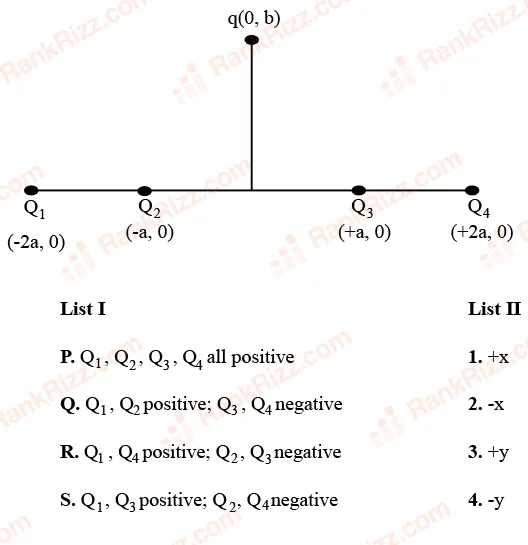
Four charges and of same magnitude are fixed along the x axis at x = −2a, −a, +a and +2a, respectively. A positive charge q is placed on the positive y axis at a distance b > 0. Four options of the signs of these charges are given in List I. The direction of the forces on the charge q is given in List II. Match List I with List II and select the correct answer using the code given below the lists.

  1. A

    P-3, Q-1, R-4, S-2

  2. B

    P-4, Q-2, R-3, S-1

  3. C

    P-3, Q-1, R-2, S-4

  4. D

    P-4, Q-2, R-1, S-3

Q18JEE ADVANCED 2014 · PAPER 2Combinations of lenses and mirrorsTRANSCRIBED

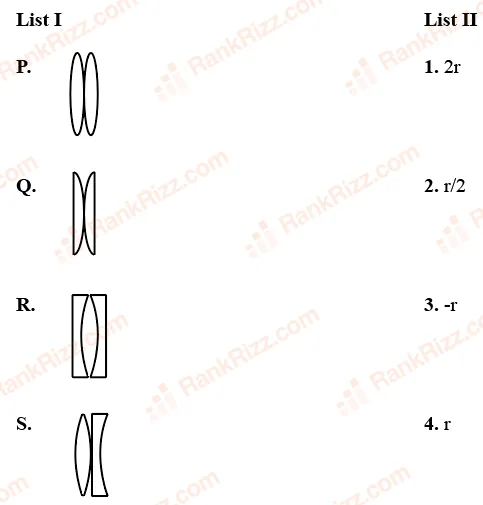
Four combinations of two thin lenses are given in List I. The radius of curvature of all curved surfaces is r and the refractive index of all the lenses is 1.5. Match lens combinations in List I with their focal length in List II and select the correct answer using the code given below the lists.


Choices:

  1. A

    P-1, Q-2, R-3, S-4

  2. B

    P-2, Q-4, R-3, S-1

  3. C

    P-4, Q-1, R-2, S-3

  4. D

    P-2, Q-1, R-3, S-4

Q19JEE ADVANCED 2014 · PAPER 2Static and kinetic frictionTRANSCRIBED

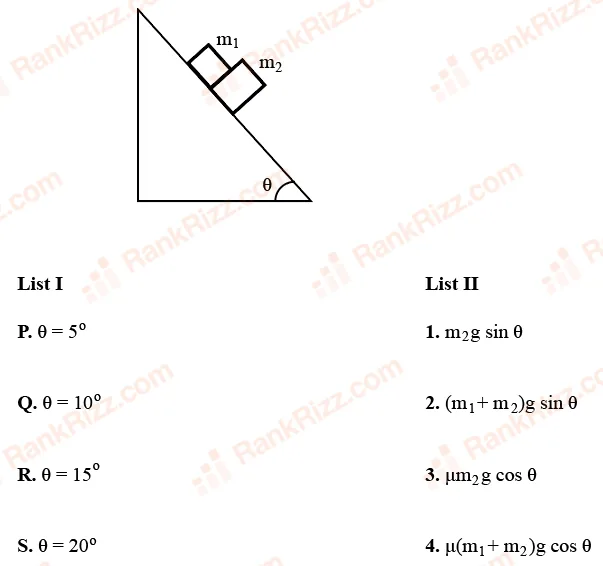
A block of mass another mass , are placed together (see figure) on an inclined plane with angle of inclination . Various values of are given in List I. The coefficient of friction between the block and the plane is always zero. The coefficient of static and dynamic friction between the block and the plane are equal to In List II expressions for the friction on block are given. Match the correct expression of the friction in List II with the angles given in List I, and choose the correct option. The acceleration due to gravity is denoted by g.
[Useful information :

Choices:

  1. A

    P-1, Q-1, R-1, S-3

  2. B

    P-2, Q-2, R-2, S-3

  3. C

    P-2, Q-2, R-2, S-4

  4. D

    P-2, Q-2, R-3, S-3

Q20JEE ADVANCED 2014 · PAPER 2Fluid pressure, Pascal's law and accelerated/rotating liquidsTRANSCRIBED

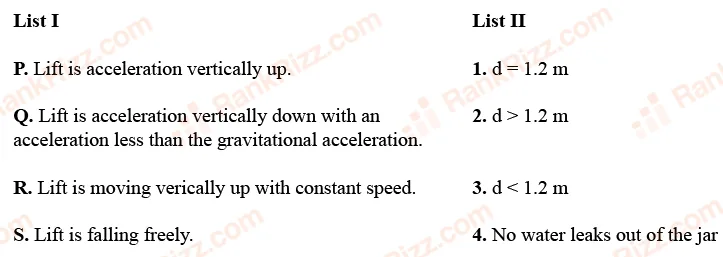
A person in a lift is holding a water jar, which has a small hole at the lower end of its side. When the lift is at rest, the water jet coming out of the hole hits the floor of the lift at a distance of 1.2 m from the person. In the following, state of the lift’s motion is given in List I and the distance where the water jet hits the floor of the lift is given in List II. Match the statements from List I with those in List II and select the correct answer using the code given below the list.

  1. A

    P-2, Q-3, R-2, S-4

  2. B

    P-2, Q-3, R-1, S-4

  3. C

    P-1, Q-1, R-1, S-4

  4. D

    P-2, Q-3, R-1, S-1

Chemistry

Q21JEE ADVANCED 2014 · PAPER 2EthersTRANSCRIBED

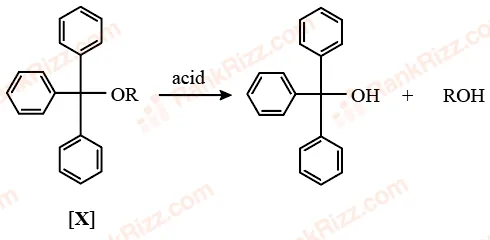
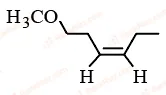
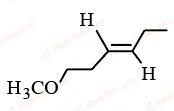
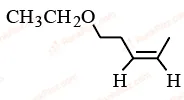
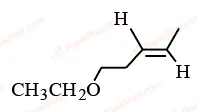
The acidic hydrolysis of ether (X) shown below is fastest when

  1. A

    one phenyl group is replaced by a methyl group.

  2. B

    one phenyl group is replaced by a para-methoxyphenyl group.

  3. C

    two phenyl groups are replaced by two para-methoxyphenyl groups.

  4. D

    no structural change is made to X.

Q22JEE ADVANCED 2014 · PAPER 2Structural isomerismTRANSCRIBED

Isomers of hexane, based on their branching, can be divided into three distinct classes as shown in the figure.


The correct order of their boiling point is

  1. A

    I > II > III

  2. B

    III > II > I

  3. C

    II > III > I

  4. D

    III > I > II

Q23JEE ADVANCED 2014 · PAPER 2Aldol condensation, Cannizzaro and related reactionsTRANSCRIBED

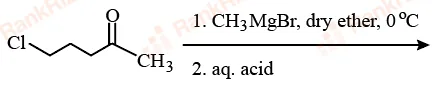
The major product in the following reaction is

  1. A
  2. B
  3. C
  4. D
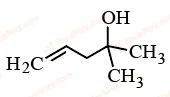
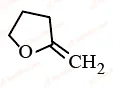
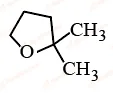
Q24JEE ADVANCED 2014 · PAPER 2Hydrogen peroxideTRANSCRIBED

Hydrogen peroxide in its reaction with and respectively, is acting as a

  1. A

    reducing agent, oxidising agent

  2. B

    reducing agent, reducing agent

  3. C

    oxidising agent, oxidising agent

  4. D

    oxidising agent, reducing agent

Q25JEE ADVANCED 2014 · PAPER 2Phosphorus and its compoundsTRANSCRIBED

The product formed in the reaction of with white phosphorous is

  1. A

  2. B

  3. C

  4. D

Q26JEE ADVANCED 2014 · PAPER 2Group 18: noble gases and xenon compoundsTRANSCRIBED

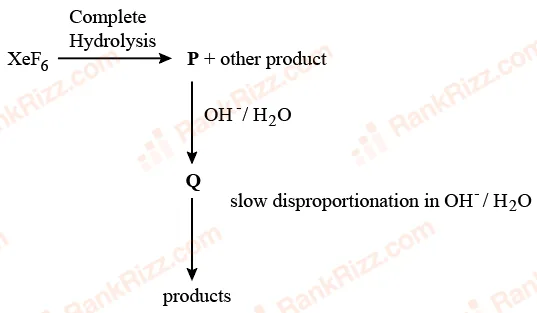
Under ambient conditions, the total number of gases released as products in the final step of the reaction scheme shown below is

  1. A

    0

  2. B

    1

  3. C

    2

  4. D

    3

Q27JEE ADVANCED 2014 · PAPER 2Reactions of phenolsTRANSCRIBED

For the identification of -naphthol using dye test, it is necessary to use

  1. A

    dichloromethane solution of -naphthol

  2. B

    acidic solution of -naphthol

  3. C

    neutral solution of -naphthol

  4. D

    alkaline solution of -naphthol

Q28JEE ADVANCED 2014 · PAPER 2Methods to determine order of reactionTRANSCRIBED

For the elementary reaction , the rate of disappearance of M increases by a factor of 8 upon doubling the concentration of M. The order of the reaction with respect to M is

  1. A

    4

  2. B

    3

  3. C

    2

  4. D

    1

Q29JEE ADVANCED 2014 · PAPER 2Gibbs energy and spontaneityTRANSCRIBED

For the process

at and 1 atmosphere pressure, the correct choice is

  1. A

    \triangle S_{system} > 0 and \triangle S_{surroundings} > 0

  2. B

    \triangle S_{system} > 0 and \triangle S_{surroundings} < 0

  3. C

    \triangle S_{system} < 0 and \triangle S_{surroundings} > 0

  4. D

    \triangle S_{system} < 0 and \triangle S_{surroundings} < 0

Q30JEE ADVANCED 2014 · PAPER 2Molecular orbital theory of diatomic speciesTRANSCRIBED

Assuming 2s-2p mixing is NOT operative, the paramagnetic species among the following is

  1. A

  2. B

  3. C

  4. D

Q32JEE ADVANCED 2014 · PAPER 2Reactions of alkynesTRANSCRIBED

The correct statement with respect to product Y is

  1. A

    It gives a positive Tollens test and is a functional isomer of X.

  2. B

    It gives a positive Tollens test and is a geometrical isomer of X.

  3. C

    It gives a positive iodoform test and is a functional isomer of X.

  4. D

    It gives a positive iodoform test and is a geometrical isomer of X.

Q33JEE ADVANCED 2014 · PAPER 2Group analysis and confirmatory tests of cationsTRANSCRIBED

M1, Q and R, respectively are

  1. A

    , KCN and HCl

  2. B

    , HCl and KCN

  3. C

    , KCN and HCl

  4. D

    , HCl, and KCN

Q34JEE ADVANCED 2014 · PAPER 2Group analysis and confirmatory tests of cationsTRANSCRIBED

Reagent S is

  1. A

  2. B

  3. C

  4. D

Q35JEE ADVANCED 2014 · PAPER 2Graham's law of diffusion and effusionTRANSCRIBED

The value of d in cm (shown in the figure), as estimated from Graham’s law, is

  1. A

    8

  2. B

    12

  3. C

    16

  4. D

    20

Q36JEE ADVANCED 2014 · PAPER 2Kinetic theory of gases and molecular speedsTRANSCRIBED

The experimental value of d is found to be smaller than the estimate obtained using Graham’s law. This is due to

  1. A

    larger mean free path for X as compared to that of Y.

  2. B

    larger mean free path for Y as compared to that of X.

  3. C

    increased collision frequency of Y with the inert gas as compared to that of X with the inert gas.

  4. D

    increased collision frequency of X with the inert gas as compared to that of Y with the inert gas.

Q37JEE ADVANCED 2014 · PAPER 2Reactive intermediates and rearrangementsTRANSCRIBED

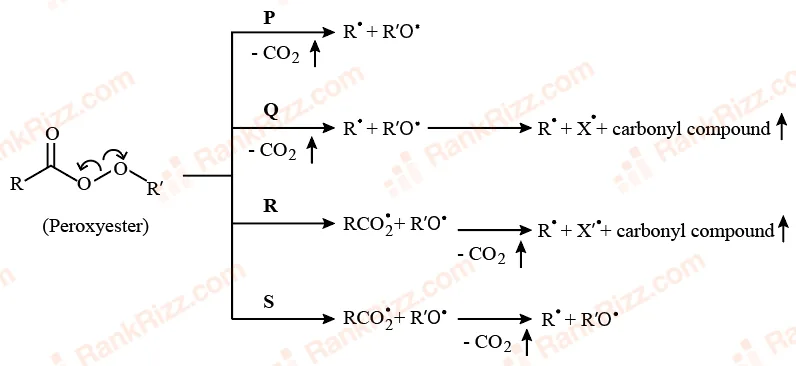
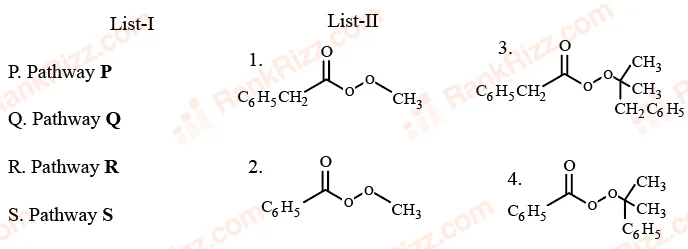
Different possible thermal decomposition pathways for peroxyesters are shown below. Match each pathway from List I with an appropriate structure from List II and select the correct answer using the code given below the lists.

Codes:

  1. A

    P - 1, Q - 3, R - 4, S - 2

  2. B

    P - 2, Q - 4, R - 3, S - 1

  3. C

    P - 4, Q - 1, R - 2, S - 3

  4. D

    P - 3, Q - 2, R - 1, S - 4

Q38JEE ADVANCED 2014 · PAPER 2Diazonium saltsTRANSCRIBED

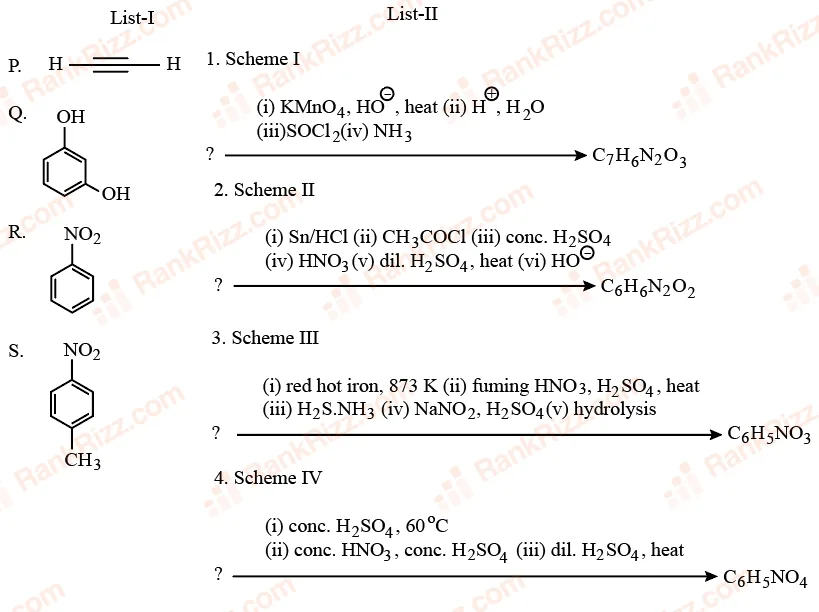
Match the four starting materials (P, Q, R, S) given in List I with the corresponding reaction schemes (I, II, III, IV) provided in List II and select the correct answer using the code given below the lists.


Codes:

  1. A

    P - 1, Q - 4, R - 2, S - 3

  2. B

    P - 3, Q - 1, R - 4, S - 2

  3. C

    P - 3, Q - 4, R - 2, S - 1

  4. D

    P - 4, Q - 1, R - 3, S - 2

Q39JEE ADVANCED 2014 · PAPER 2Geometrical and optical isomerism in complexesTRANSCRIBED

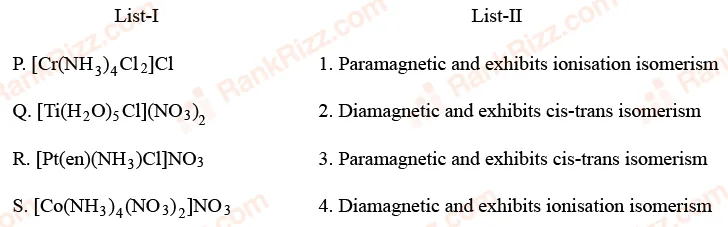
Match each coordination compound in List-I with an appropriate pair of characteristics from List-II and select the correct answer using the code given below the lists.
{en = ; atomic numbers: Ti = 22; Cr = 24; Co = 27; Pt = 78}

  1. A

    P - 4, Q - 2, R - 3, S - 1

  2. B

    P - 3, Q - 1, R - 4, S - 2

  3. C

    P - 2, Q - 1, R - 3, S - 4

  4. D

    P - 1, Q - 3, R - 4, S - 2

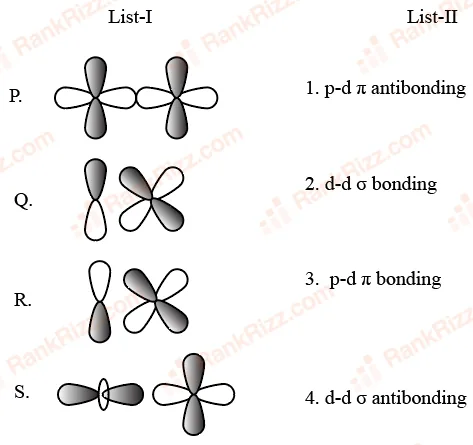
Q40JEE ADVANCED 2014 · PAPER 2Valence bond theory, orbital overlap and sigma/pi bondsTRANSCRIBED

Match the orbital overlap figures shown in List-I with the description given in List-II and select the correct answer using the code given below the lists.

  1. A

    P - 2, Q - 1, R - 3, S - 4

  2. B

    P - 4, Q - 3, R - 1, S - 2

  3. C

    P - 2, Q - 3, R - 1, S - 4

  4. D

    P - 4, Q - 1, R - 3, S - 2

Mathematics

Q41JEE ADVANCED 2014 · PAPER 2Linear first-order differential equationsTRANSCRIBED

The function y = f(x) is the solution of the differential equation

in (−1, 1) satisfying f(0) = 0. Then
is

  1. A

  2. B

  3. C

  4. D

Q42JEE ADVANCED 2014 · PAPER 2Definite integrals: properties and King's ruleTRANSCRIBED

The following integral

is equal to

  1. A

  2. B

  3. C

  4. D

Q43JEE ADVANCED 2014 · PAPER 2Multinomial expansionsTRANSCRIBED

Coefficient of in the expansion of is

  1. A

    1051

  2. B

    1106

  3. C

    1113

  4. D

    1120

Q44JEE ADVANCED 2014 · PAPER 2Derivatives of standard and composite functionsTRANSCRIBED

Let be a function which is continuous on [0, 2] and is differentiable on (0, 2) with f(0) = 1. Let

for If for all then F(2) equals

  1. A

  2. B

  3. C

  4. D

Q45JEE ADVANCED 2014 · PAPER 2Common tangents involving a parabolaTRANSCRIBED

The common tangents to the circle and the parabola touch the circle at the points P, Q and the parabola at the points R, S. Then the area of the quadrilateral PQRS is

  1. A

    3

  2. B

    6

  3. C

    9

  4. D

    15

Q46JEE ADVANCED 2014 · PAPER 2Equations with parameters and trigonometric inequalitiesTRANSCRIBED

For , the equation has

  1. A

    infinitely many solutions

  2. B

    three solutions

  3. C

    one solution

  4. D

    no solution

Q47JEE ADVANCED 2014 · PAPER 2Circumradius, inradius, exradii, medians and bisectorsTRANSCRIBED

In a triangle the sum of two sides is x and the product of the same two sides is y. If where c is the third side of the triangle, then the ratio of the in-radius to the circum-radius of the triangle is

  1. A

  2. B

  3. C

  4. D

Q48JEE ADVANCED 2014 · PAPER 2DerangementsTRANSCRIBED

Six cards and six envelopes are numbered 1, 2, 3, 4, 5, 6 and cards are to be placed in envelopes so that each envelope contains exactly one card and no card is placed in the envelope bearing the same number and moreover the card numbered 1 is always placed in envelope numbered 2. Then the number of ways it can be done is

  1. A

    264

  2. B

    265

  3. C

    53

  4. D

    67

Q49JEE ADVANCED 2014 · PAPER 2Probability using permutations and combinationsTRANSCRIBED

Three boys and two girls stand in a queue. The probability, that the number of boys ahead of every girl is at least one more than the number of girls ahead of her, is

  1. A

  2. B

  3. C

  4. D

Q50JEE ADVANCED 2014 · PAPER 2Nature of roots and discriminantTRANSCRIBED

The quadratic equation p(x) = 0 with real coefficients has purely imaginary roots. Then the equation p(p(x)) = 0 has

  1. A

    only purely imaginary roots

  2. B

    all real roots

  3. C

    two real and two purely imaginary roots

  4. D

    neither real nor purely imaginary roots

Q51JEE ADVANCED 2014 · PAPER 2Equation of a circle in various formsTRANSCRIBED

The value of r is
Choices:

  1. A

  2. B

  3. C

  4. D

Q52JEE ADVANCED 2014 · PAPER 2Tangents, pair of tangents and chord of contactTRANSCRIBED

If st = 1, then the tangent at P and the normal at S to the parabola meet at a point whose ordinate is

  1. A

  2. B

  3. C

  4. D

Q53JEE ADVANCED 2014 · PAPER 2Equation of a circle in various formsTRANSCRIBED

The value of is

  1. A

  2. B

  3. C

  4. D

Q54JEE ADVANCED 2014 · PAPER 2Equation of a circle in various formsTRANSCRIBED

The value of is

  1. A

  2. B

  3. C

  4. D

    0

Q55JEE ADVANCED 2014 · PAPER 2Equation of a circle in various formsTRANSCRIBED

The probability that is odd, is

  1. A

  2. B

  3. C

  4. D

Q56JEE ADVANCED 2014 · PAPER 2Equation of a circle in various formsTRANSCRIBED

The probability that are in an arithmetic progression, is

  1. A

  2. B

  3. C

  4. D

Q57JEE ADVANCED 2014 · PAPER 2Equation of a circle in various formsTRANSCRIBED

Let

  1. A

    P - 1, Q - 2, R - 4, S - 3

  2. B

    P - 2, Q - 1, R - 3, S - 4

  3. C

    P - 1, Q - 2, R - 3, S - 4

  4. D

    P - 2, Q - 1, R - 4, S - 3

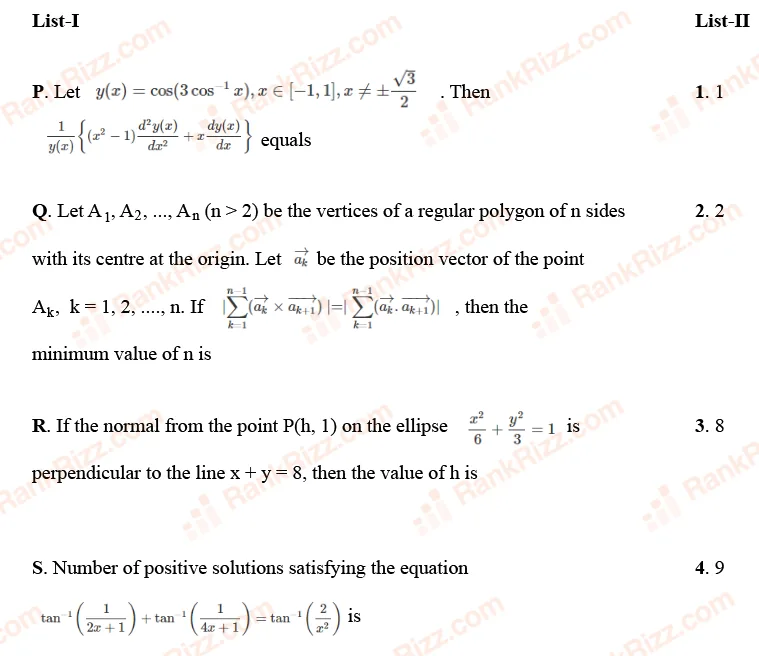
Q58JEE ADVANCED 2014 · PAPER 2Equation of a circle in various formsTRANSCRIBED
  1. A

    P - 3, Q - 2, R - 4, S - 1

  2. B

    P - 2, Q - 3, R - 4, S - 1

  3. C

    P - 3, Q - 2, R - 1, S - 4

  4. D

    P - 2, Q - 3, R - 1, S - 4

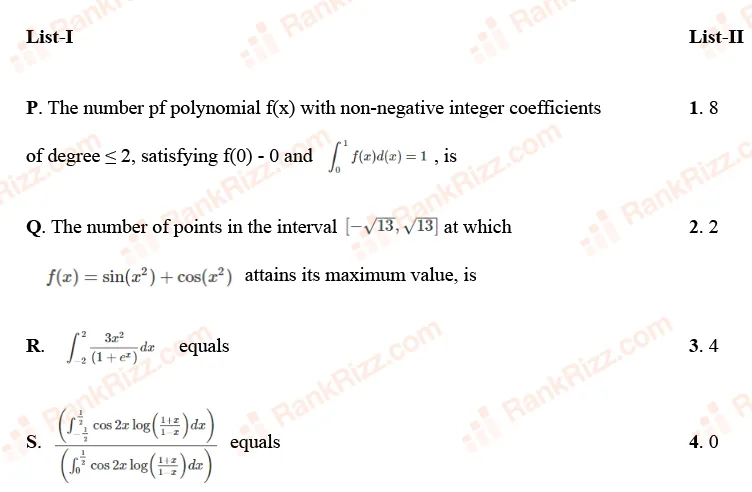
Q59JEE ADVANCED 2014 · PAPER 2Equation of a circle in various formsTRANSCRIBED
  1. A

    P - 4, Q - 3, R - 2, S - 1

  2. B

    P - 2, Q - 4, R - 3, S - 1

  3. C

    P - 4, Q - 3, R - 1, S - 2

  4. D

    P - 2, Q - 4, R - 1, S - 3

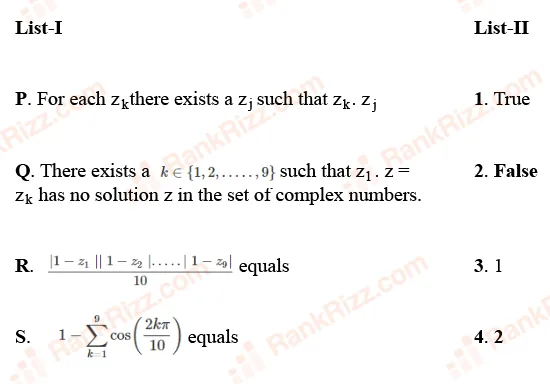
Q60JEE ADVANCED 2014 · PAPER 2Composite functionsTRANSCRIBED

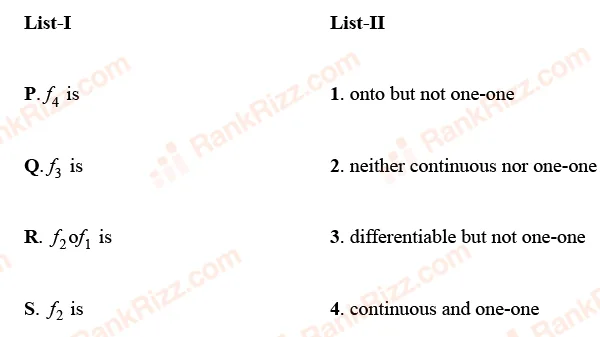
Let and be defined by


and

  1. A

    P - 3, Q - 1, R - 4, S - 2

  2. B

    P - 1, Q - 3, R - 4, S - 2

  3. C

    P - 3, Q - 1, R - 2, S - 4

  4. D

    P - 1, Q - 3, R - 2, S - 4