RankRizzStart free

JEE Advanced 2011 Paper 2 Question Paper

All 60 questions of JEE Advanced 2011 Paper 2, in the order they were asked. Pick an answer on any question to check it against the key. Free to read, nothing to download.

Questions

60

Chemistry · Physics · Mathematics

Answer key

60

questions with a checked key

Under review

0

key not yet trusted

Price

Free

no sign-up

Chemistry

Q1JEE ADVANCED 2011 · PAPER 2Occurrence of metals: minerals and oresTRANSCRIBED

Oxidation states of the metal in the minerals haematite and magnetite, respectively, are

  1. A

    II, III in haematite and III in magnetite

  2. B

    II, III in haematite and II in magnetite

  3. C

    II in haematite and II, III in magnetite
  4. D

    III in haematite and II, III in magnetite
Q2JEE ADVANCED 2011 · PAPER 2Valence bond theory of complexesTRANSCRIBED

Among the following complexes and the diamegnetic complexes are

  1. A

    K, L, M, N

  2. B

    K, M, O, P

  3. C

    L, M, O, P

  4. D

    L, M, N, O

Q3JEE ADVANCED 2011 · PAPER 2Group analysis and confirmatory tests of cationsTRANSCRIBED

Passing gasinto a mixture of and ions in an acidified aqueous solution precipitates

  1. A

    CuS and HgS

  2. B

    MnS and CuS

  3. C

    MnS and NiS

  4. D

    NiS and HgS

Q4JEE ADVANCED 2011 · PAPER 2Electrode potentials, electrochemical series and cell EMFTRANSCRIBED

Consider the following cell reaction:
At atm and pH = 3, the cell potential at is

  1. A

    1.47 V

  2. B

    1.77 V

  3. C

    1.87 V

  4. D

    1.57 V

Q5JEE ADVANCED 2011 · PAPER 2Abnormal molar mass and van't Hoff factorTRANSCRIBED

The freezing point (in ) of a solution containing 0.1 g of in 100 g of water is

  1. A

  2. B

  3. C

  4. D

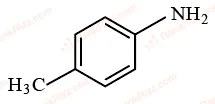
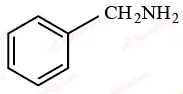
Q6JEE ADVANCED 2011 · PAPER 2Diazonium saltsTRANSCRIBED

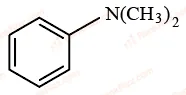
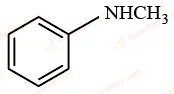
Amongst the compounds given, the one that would form a brilliant colored dye on treatment with in dil. HCl followed by addition to an alkaline solution of -naphthol is

  1. A
  2. B
  3. C
  4. D
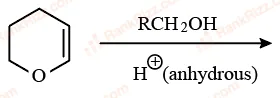
Q7JEE ADVANCED 2011 · PAPER 2Electrophilic addition to alkenesTRANSCRIBED

The major product of the following reaction is

  1. A

    a hemiacetal

  2. B

    an acetal

  3. C

    an ether

  4. D

    an ester

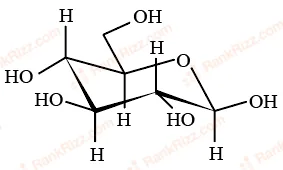
Q8JEE ADVANCED 2011 · PAPER 2Carbohydrates: classification and monosaccharidesTRANSCRIBED

The following carbohydrate is

  1. A

    a ketohexose

  2. B

    an aldohexose

  3. C

    an -furanose

  4. D

    an -pyranose

Q9JEE ADVANCED 2011 · PAPER 2Balancing redox equationsTRANSCRIBED

Reduction of the metal centre in aqueous permanganateion involves

  1. A

    3 electrons in neutral medium

  2. B

    5 electrons in neutral medium

  3. C

    3 electrons in alkaline medium

  4. D

    5 electrons in acidic medium

Q10JEE ADVANCED 2011 · PAPER 2Le Chatelier's principle and factors affecting equilibriumTRANSCRIBED

The equilibrium

in aqueous medium at shifts towards the left in the presence of

  1. A

  2. B

  3. C

  4. D

Q11JEE ADVANCED 2011 · PAPER 2Integrated rate laws and half-life (zero and first order)TRANSCRIBED

For the first order reaction

  1. A

    the concentration of the reactant decreases exponentially with time.

  2. B

    the half-life of the reaction decreases with increasing temperature.

  3. C

    the half-life of the reaction depends on the initial concentration of the reactant.

  4. D

    the reaction proceeds to 99.6 % completion in eight half-life duration.

Q12JEE ADVANCED 2011 · PAPER 2Classification of polymers and types of polymerisationTRANSCRIBED

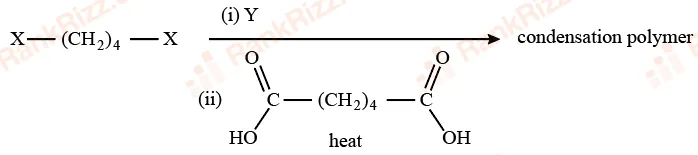
The correct functional group X and the reagent/reaction conditions Y in the following scheme are

  1. A

  2. B

  3. C

  4. D

Q13JEE ADVANCED 2011 · PAPER 2Phosphorus and its compoundsTRANSCRIBED

Among the following, the number of compoundsthan can react with to give is

Q14JEE ADVANCED 2011 · PAPER 2Concentration terms and their interconversionTRANSCRIBED

The volume (in mL) of 0.1 M required for complete precipitation of chloride ions present in 30 mL of 0.01 M solution of , as silver chloride is close to

Q15JEE ADVANCED 2011 · PAPER 2Solubility product and common ion effectTRANSCRIBED

In 1 L saturated solution of , 0.1 mol of is added. The resultant concentration of in the solution is . The value of "x" is

Q16JEE ADVANCED 2011 · PAPER 2Voids, radius ratio and structures of ionic solidsTRANSCRIBED

The number of hexagonal faces that are present in a truncated octahedron is

Q17JEE ADVANCED 2011 · PAPER 2Alkanes: preparation and propertiesTRANSCRIBED

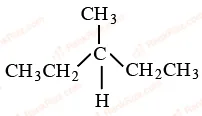
The maximum number of isomers (including stereoisomers) that are possible on monochlorination of the following compound, is

Q18JEE ADVANCED 2011 · PAPER 2Reactive intermediates and rearrangementsTRANSCRIBED

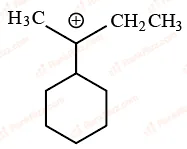
The total number of contributing structures showing hyperconjugation (involving C-H bonds)for the following carbocation is

Q19JEE ADVANCED 2011 · PAPER 2Enthalpies of reaction and Hess's lawTRANSCRIBED

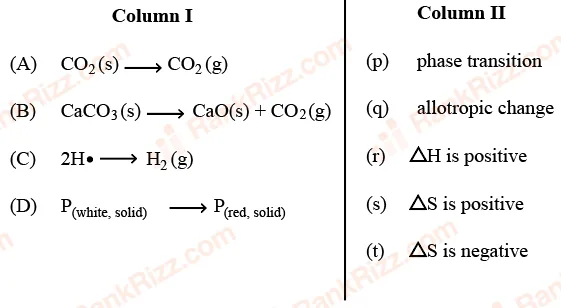
Match the transformations in column I with appropriate options in column II

Q20JEE ADVANCED 2011 · PAPER 2Properties and reactions of alcoholsTRANSCRIBED

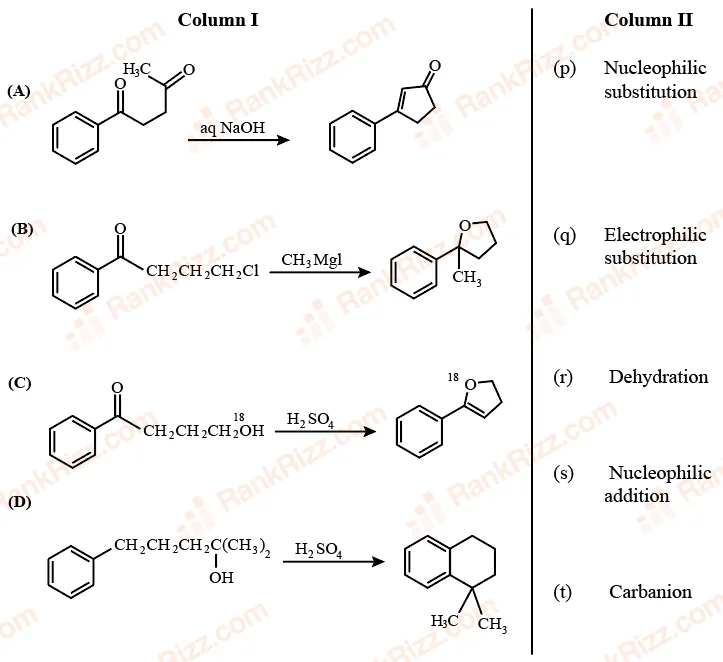
Match the reactions in column I with appropriate types of steps/reactive intermediate involved in these reactions as given in column II

Physics

Q21JEE ADVANCED 2011 · PAPER 2Prism: deviation and dispersionTRANSCRIBED

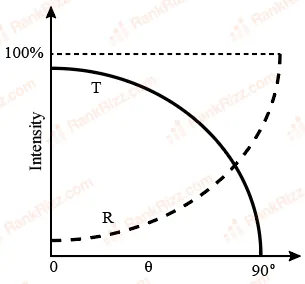
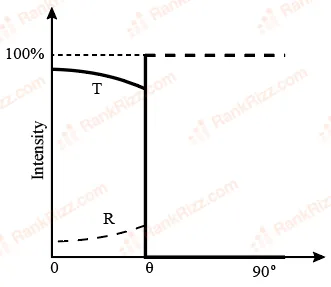
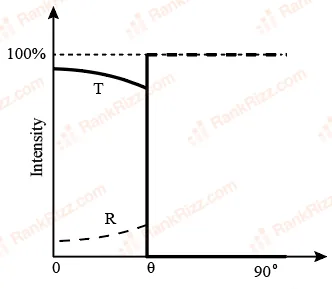
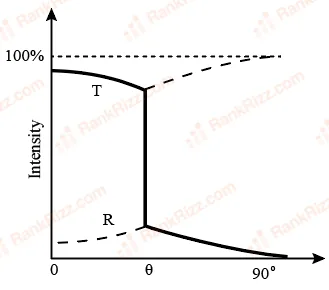
A light ray traveling in glass medium is incident on glass-air interface at an angle of incidence . The reflected ( R ) and transmitted ( T ) intensities, both as function of , are plotted. The correct sketch is

  1. A
  2. B
  3. C
  4. D
Q22JEE ADVANCED 2011 · PAPER 2Escape speedTRANSCRIBED

A satellite is moving with a constant speed ‘V’ in a circular orbit about the earth. An object of mass ‘m’ is ejected from the satellite such that it just escapes from the gravitational pull
of the earth. At the time of its ejection, the kinetic energy of the object is

  1. A

  2. B

  3. C

  4. D

Q23JEE ADVANCED 2011 · PAPER 2Magnetic field of circular loops, arcs and coilsTRANSCRIBED

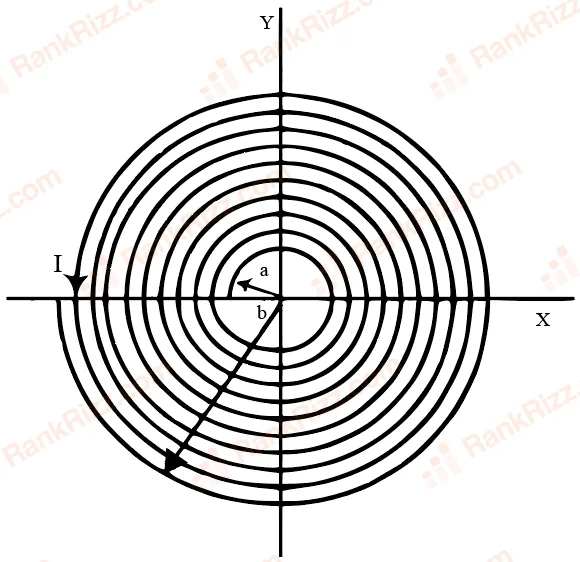
A long insulated copper wire is closely wound asa spiral of ‘N’ turns. The spiral has inner radius ‘a’ and outer radius ‘b’. The spiral lies in the X-Y plane and a steady current ‘I’ flows through the wire. The Z-component of the magnetic field at the center of the spiral is

  1. A

  2. B

  3. C

  4. D

Q24JEE ADVANCED 2011 · PAPER 2Spring-block oscillationsTRANSCRIBED

A point mass is subjected to two simultaneous sinusoidal displacements in x-direction, and . Adding a third sinusoidal displacement brings the mass to a complete rest. The value of B and are

  1. A

  2. B

  3. C

  4. D

Q25JEE ADVANCED 2011 · PAPER 2Electric field of continuous charge distributionsTRANSCRIBED

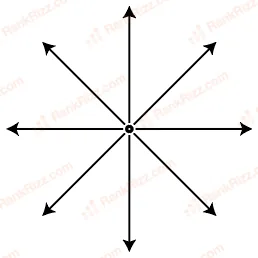
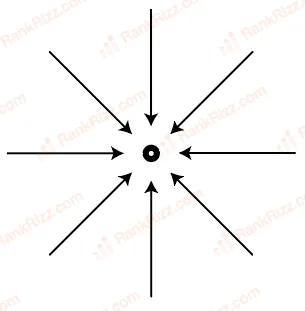
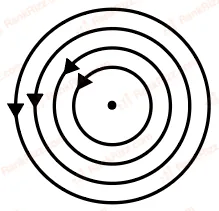
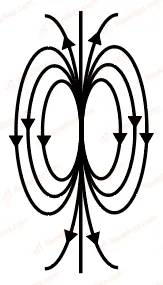
Which of the field patterns given below is valid for electric field as well as for magnetic field?

  1. A
  2. B
  3. C
  4. D
Q26JEE ADVANCED 2011 · PAPER 2Impulse and impulse-momentum theoremTRANSCRIBED

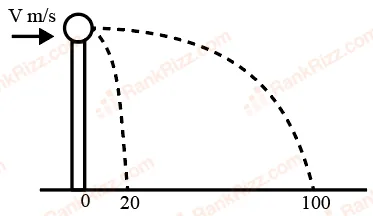
A ball of mass 0.2 kg rests on a vertical post of height 5 m. A bullet of mass 0.01 kg, traveling with a velocity V m/s in a horizontal direction, hits the centre of the ball. After the collision, the ball and bullet travel independently. The ball hits the ground at a distance of 20 m and the bullet at a distance of 100 m from the foot of the post. The initial velocity V of the bullet is

  1. A

    250 m/s

  2. B

    m/s

  3. C

    400 m/s

  4. D

    500 m/s

Q27JEE ADVANCED 2011 · PAPER 2Screw gauge: pitch, least count and zero errorTRANSCRIBED

The density of a solid ball is to be determined in an experiment. The diameter of the ball is measured with a screw gauge, whose pitch is 0.5 mm and there are 50 divisions on the circular scale. The reading on the main scale is 2.5 mm and that on the circular scale is 20 divisions. If the measured mass of the ball has a relative error of 2%, the relative percentage error in the density is

  1. A

    0.9%

  2. B

    2.4%

  3. C

    3.1%

  4. D

    4.2%

Q28JEE ADVANCED 2011 · PAPER 2Spring-block oscillationsTRANSCRIBED

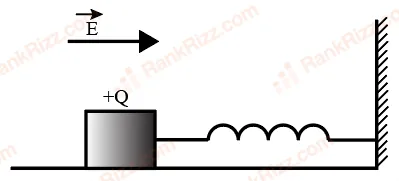
A wooden block performs SHM on a frictionless surface with frequency, . The block carries a charge +Q on its surface. If now a uniform electric field is switched-on as shown, then the SHM of the block will be

  1. A

    of the same frequency and with shifted mean position.

  2. B

    of the same frequency and with the same mean position.

  3. C

    of changed frequency and with shifted mean position.

  4. D

    of changed frequency and with the same mean position.

Q29JEE ADVANCED 2011 · PAPER 2Fluid pressure, Pascal's law and accelerated/rotating liquidsTRANSCRIBED

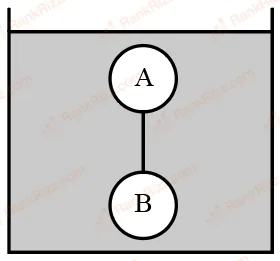
Two solid spheres A and B of equal volumes but of different densities and are connected by a string. They are fully immersed in a fluid of density . They get arranged into an equilibrium state as shown in the figure with a tension in the string. The arrangement is possible only if

  1. A

    d_A < d_F

  2. B

    d_B > d_F

  3. C

    d_A > d_F

  4. D

Q30JEE ADVANCED 2011 · PAPER 2AC basics: rms and average values, phasorsTRANSCRIBED

A series R-C circuit is connected to AC voltage source. Consider two cases; (A) when C is without a dielectric medium and (B) when C is filled with dielectric of constant 4. The
current through the resistor and voltage across the capacitor are comparedin the two cases. Whichof the following is/are true?

  1. A

    I_{R}^{A} > I_{R}^{B}

  2. B

    I_{R}^{A} < I_{R}^{B}

  3. C

    V_{C}^{A} > V_{C}^{B}

  4. D

    V_{C}^{A} < V_{C}^{B}

Q31JEE ADVANCED 2011 · PAPER 2Electric flux and Gauss's lawTRANSCRIBED

Which of the following statement(s) is/are correct?

  1. A

    If the electric field due to a point charge varies as instead of , then the Gausslaw will still be valid.

  2. B

    The Gauss law can be used to calculate the field distribution around an electric dipole.

  3. C

    If the electric field between two point charges is zero somewhere, then the sign of the two chargesis the same.

  4. D

    The work doneby the external force in moving a unit positive charge from point A at potential to point B at potential is .

Q32JEE ADVANCED 2011 · PAPER 2Angular momentum of particles and rigid bodiesTRANSCRIBED

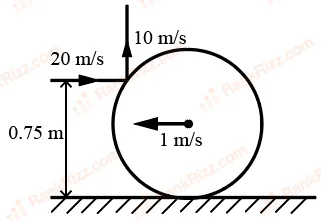
A thin ring of mass 2 kg and radius 0.5 m is rolling without slipping on a horizontal plane with velocity 1 m/s. A small ball of mass 0.1 kg, moving with velocity 20 m/s in the opposite direction, hits the ring at a height of 0.75 m and goes vertically up with velocity 10 m/s. Immediately after the collision

  1. A

    the ring has pure rotation aboutits stationary CM.

  2. B

    the ring comes to a complete stop.

  3. C

    friction between the ring and the ground is to the left.

  4. D

    there is no friction between the ring and the ground.

Q33JEE ADVANCED 2011 · PAPER 2Relative velocity in two dimensionsTRANSCRIBED

A train is moving along a straight line with a constant acceleration ‘a’. A boy standing in the train throwsa ball forward with a speed of 10 m/s, at an angle of to the horizontal. The boy has to move forward by 1.15 m inside the train to catch the ball backat the initial height. The acceleration of the train, in , is

Q34JEE ADVANCED 2011 · PAPER 2Potential energy, conservative forces and energy curvesTRANSCRIBED

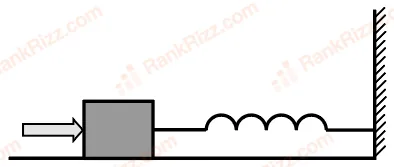
A block of mass 0.18 kg is attached to a spring of force-constant 2 N/m. The coefficient of friction between the block and the floor is 0.1. Initially the block is at rest and the spring is un-stretched. An impulse is given to the block as shown in the figure. The block slides a distance of 0.06 m and comes to rest for the first time. The initial velocity of the block in m/s is V = N/10. Then N is

Q35JEE ADVANCED 2011 · PAPER 2Kirchhoff's laws and circuit analysisTRANSCRIBED

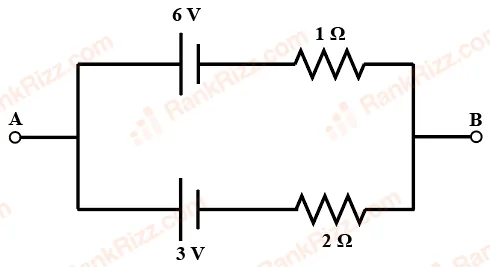
Two batteries of different emfs and different internal resistances are connected as shown. The voltage across AB in volts is

Q36JEE ADVANCED 2011 · PAPER 2Prism: deviation and dispersionTRANSCRIBED

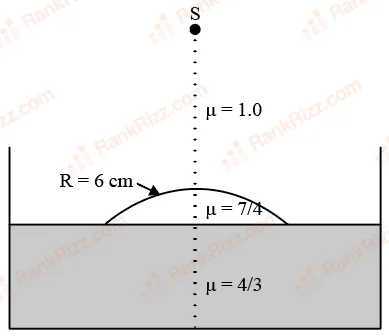
Water (with refractive index = ) in a tank is 18 cm deep. Oil of refractive index lies on water making a convex surface of radius of curvature ‘R = 6 cm’ as shown. Consider oil to act as a thin lens. An object ‘S’ is placed 24 cm above water surface. The location of its image is at ‘x’ cm above the bottom of the tank. Then ‘x’ is

Q37JEE ADVANCED 2011 · PAPER 2AC basics: rms and average values, phasorsTRANSCRIBED

A series R-C combination is connected to an AC voltage of angular frequency radian/s. If the impedance of the R-C circuit is , the time constant
(in millisecond) of the circuit is

Q38JEE ADVANCED 2011 · PAPER 2Photoelectric effect and Einstein's equationTRANSCRIBED

A silver sphere of radius 1 cm and work function 4.7 eV is suspended from an insulating thread in free-space. It is under continuous illumination of 200 nm wavelength light. As photoelectrons are emitted, the sphere gets charged and acquires a potential. The maximum number of photoelectrons emitted from the sphere is (where 1 < A < 10). The value of ‘Z’ is

Q39JEE ADVANCED 2011 · PAPER 2Multi-step processes and gas-piston-spring systemsTRANSCRIBED

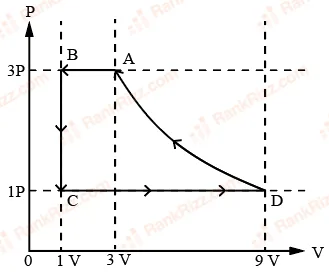
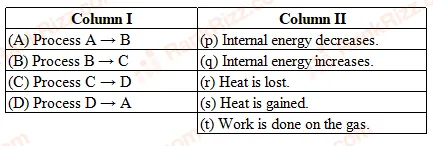
One mole of a monatomic ideal gas is taken through a cycle ABCDA as shown in the P-V diagram. Column II gives the characteristics involved in the cycle. Match them with each of the processes given in Column I.

Q40JEE ADVANCED 2011 · PAPER 2Superposition, interference and beatsTRANSCRIBED

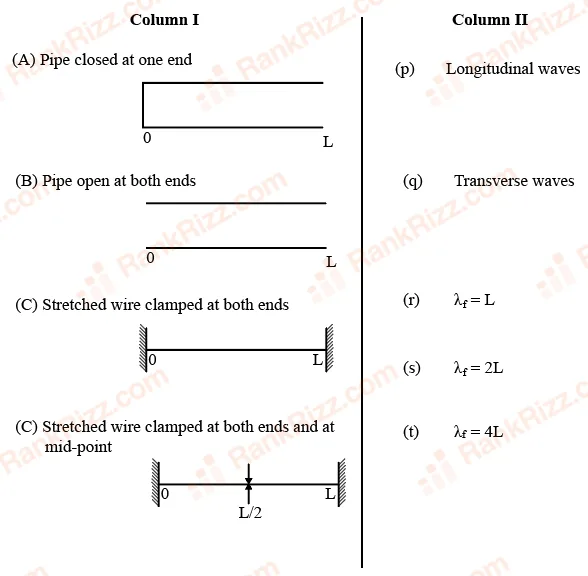
Column I shows four systems, each of the same length L, for producing standing waves. The lowest possible natural frequency of a system is called its fundamental frequency, whose wavelength is denoted as . Match each system with statements given in Column II describing the nature and wavelength of the standing waves.

Mathematics

Q41JEE ADVANCED 2011 · PAPER 2Normals to a hyperbolaTRANSCRIBED

Let P(6, 3) be a point on the hyperbola . If the normal at the point P intersects the x-axis at (9, 0), then the eccentricity of the hyperbola is

  1. A

  2. B

  3. C

  4. D

Q42JEE ADVANCED 2011 · PAPER 2Common roots of equationsTRANSCRIBED

A value of b for which the equations

,
have one root in common is

  1. A

  2. B

  3. C

  4. D

Q43JEE ADVANCED 2011 · PAPER 2Properties of determinantsTRANSCRIBED

Let be a cube root of unity and S bethe set of all non-singular matrices of the form
,
where each of a, b, and c is either or . Then the number of distinct matrices in the set S is

  1. A

    2

  2. B

    6

  3. C

    4

  4. D

    8

Q44JEE ADVANCED 2011 · PAPER 2Intercepts and position of a pointTRANSCRIBED

The circle passing through the point (-1,0) and touching the y-axis at (0, 2) also passes through the point

  1. A

  2. B

  3. C

  4. D

Q45JEE ADVANCED 2011 · PAPER 2L'Hopital's rule and series expansionsTRANSCRIBED

If
\lim_{x \rightarrow 0} \left[1 + x \ln (1 + b^2)\right]^{\frac{1}{x}} = 2b \sin \theta, b &gt; 0 and , then the value of is

  1. A

  2. B

  3. C

  4. D

Q46JEE ADVANCED 2011 · PAPER 2Area between curvesTRANSCRIBED

Let be a continuous function such that for all . Let and be the area of the region bounded by y = f(x), x = -1, x = 2, and the x-axis. Then

  1. A

  2. B

  3. C

  4. D

Q47JEE ADVANCED 2011 · PAPER 2Composite functionsTRANSCRIBED

Let and for all . Then the set of all x satisfying , where , is

  1. A

  2. B

  3. C

  4. D

Q48JEE ADVANCED 2011 · PAPER 2Locus problems on parabolaTRANSCRIBED

Let (x, y) be any point on the parabola . Let P be the point that divides the line segment from (0, 0) to (x, y) in the ratio 1:3. Then the locus of P is

  1. A

  2. B

  3. C

  4. D

Q49JEE ADVANCED 2011 · PAPER 2Differentiability at a pointTRANSCRIBED

If
, then

  1. A

    f(x) is continuous at

  2. B

    f(x) is not differentiable at x =0

  3. C

    f(x) is differentiable at x=1

  4. D

    f(x) is differentiable at

Q50JEE ADVANCED 2011 · PAPER 2Conditional probability and multiplication theoremTRANSCRIBED

Let E and F be two independent events. The probability that exactly one of them occurs is and the probability of none of them occurring is . If P(T) denotes the probability of occurrence of the event T , then

  1. A

  2. B

  3. C

  4. D

Q51JEE ADVANCED 2011 · PAPER 2Normals to a parabolaTRANSCRIBED

Let L be anormal to the parabola . If L passes through the point (9, 6), then L is given by

  1. A

    y - x + 3 = 0

  2. B

    y + 3x - 33 = 0

  3. C

    y + x - 15 = 0

  4. D

    y - 2x + 12 = 0

Q52JEE ADVANCED 2011 · PAPER 2Inverse functionsTRANSCRIBED

Let be defined by
, where b is a constant such that 0 < b < 1. Then

  1. A

    f is not invertible on (0, 1)

  2. B

    on (0, 1) and

  3. C

    on (0, 1) and

  4. D

    is differentiable on (0, 1)

Q53JEE ADVANCED 2011 · PAPER 2Cube roots and nth roots of unityTRANSCRIBED

Let and a, b, c, x, y, z be non-zero complex numbers such that


.
Ten the value of is

Q54JEE ADVANCED 2011 · PAPER 2Nature of roots and discriminantTRANSCRIBED

The number of distinct real roots of is

Q55JEE ADVANCED 2011 · PAPER 2Linear first-order differential equationsTRANSCRIBED

Let , where denotes and is a given non-constant differentiable function on R with g(0) = g(2) = 0. Then the value of y(2) is

Q56JEE ADVANCED 2011 · PAPER 2Trace and special matricesTRANSCRIBED

Let M be a matrix satisfying
, and . Then the sum of the diagonal entries of M is

Q57JEE ADVANCED 2011 · PAPER 2Scalar (dot) productTRANSCRIBED

Let and be three given vectors. If is a vector such that and , then the value of is

Q58JEE ADVANCED 2011 · PAPER 2Intercepts and position of a pointTRANSCRIBED

The straight line 2x - 3y = 1 divides the circular region into two parts. If
,
then the number of point(s) in S lying inside the smaller part is

Q59JEE ADVANCED 2011 · PAPER 2Equation of a circle in various formsTRANSCRIBED

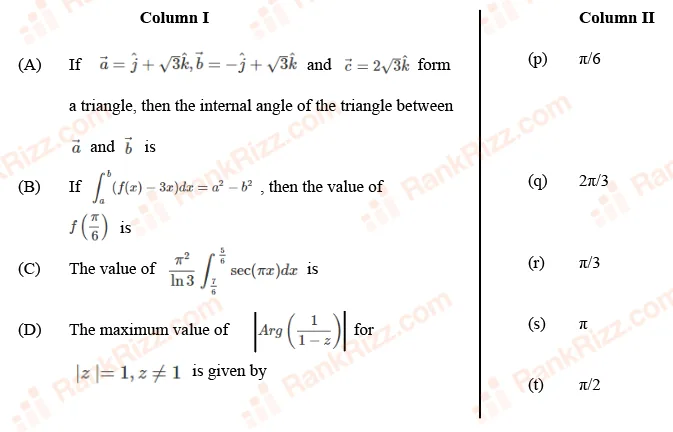
Match the statements given in Column I with the values given in Column II

Q60JEE ADVANCED 2011 · PAPER 2Domain of real functionsTRANSCRIBED

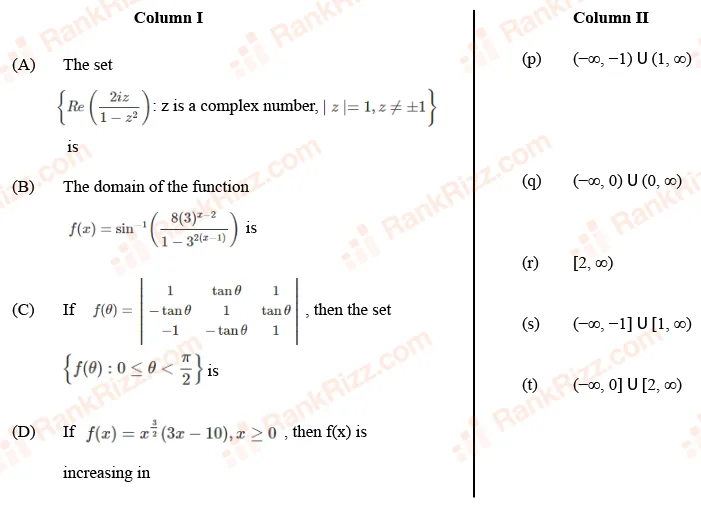
Match the statements given in Column I with the intervals/union of intervals given in Column II